Join me on Substack!

Monday, April 03, 2023


I haven't written here on The Little House in the City in quite some time, but a steady trickle of folks find there way here through search. If you like what you've found here on my old blog, you might also like my Substack newsletter LIVING SMALL. You can subscribe right here; most of the content in free, but if you chose to subscribe for the paid edition, you'll get additional content. 

I hope you'll join me on Substack!

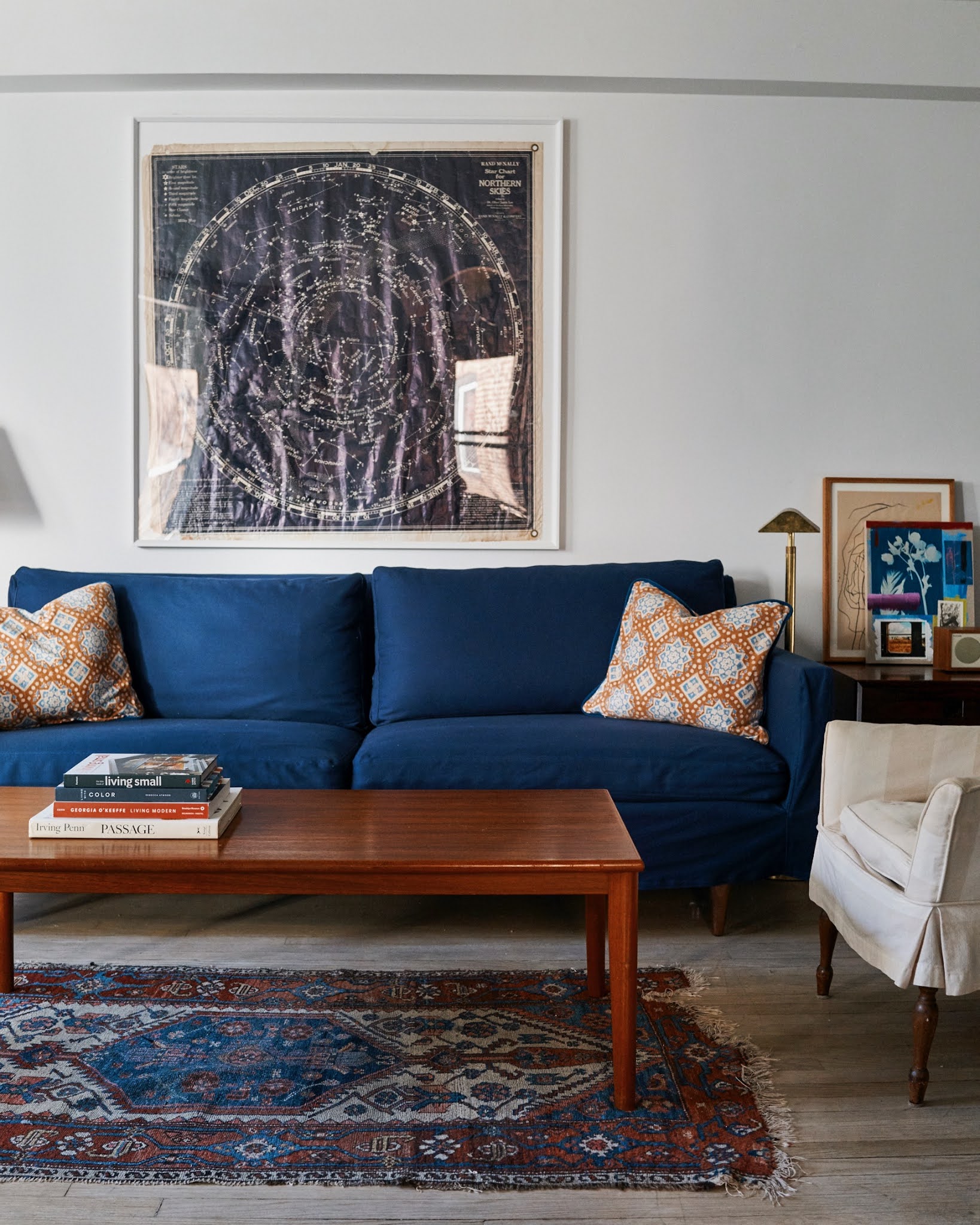
Slipcover for My Room & Board Jasper Sofa from Comfortworks

Friday, February 05, 2021

This post is about my new Comfortworks slipcover for my 86-inch Jasper sofa from Room & Board. The slipcover was a gift from Comfortworks but all the opinions below are my own.

Back in 2010, I bought my first major piece of furniture: A Jasper sofa from Room & Board. At the time, this was a big investment for me (heck it still would be!), but I had been down the road of cheap couches, including an IKEA sofa that literally split in two. This time, I wanted something that would last for years, if not a lifetime. 


And last it has! Our sofa is in its eleventh year, and it is still in great shape. I am really impressed by the quality of the Room & Board construction—even the pillows have held their shape pretty well. The slipcover, however, has seen better days (blame me and my kid, not Room & Board), and strangely, the base layer upholstery has also faded in weird ways (though the fabric is in mint condition otherwise). It looked fine from a distance and in photos (see below), but was time for a new slipcover. 


So, when Comfortworks reached out to ask if I would be interested in trying out their slipcovers, I eagerly said yes. Comfortworks is an Australian-based, family-owned manufacturer of slipcovers, whose motto is "Give your sofa another chance" (love that!). They started out specializing in covers for popular couches, from IKEA, Pottery Barn, and Muji, but Comfortworks has recently expanded to include many more brands, including, you guessed it, Room & Board’s Jasper. They can also create custom slipcovers for almost any type of sofa.

I love slipcovers because they let you give an old piece a new life and they can completely transform the look of a room in the process. However, living in New York City, commissioning a custom slipcover would have cost much more than the $519 Comfortworks charges for a slipcover for the 86-inch Jasper (fabric alone could have eaten up a $500 budget!). We were also ready for a new look in our living room, which made working with Comfortworks appealing, since Room & Board only offers the Jasper slipcover in various shades of taupe, ivory, and gray, which are all similar to what we already had. 


When I worked with Comforworks earlier this year, Jasper was not yet an off-the-shelf offering, so my slipcover was technically a custom cover. (I suspect I was their Jasper guinea pig.) Here's what the process of ordering a custom slipcover looked like:


First, I ordered various shades of blue fabric samples from Comfortworks to test out in our space, including (Kino Denim, Kino Navy, Claw-proof Velvet Blue, Performance Velvet Indigo, Cotton Canvas Navy, and Cotton Canvas Madison Coal). When the samples finally arrived, the Cotton Canvas Navy was the clear winner. I preferred the natural-fiber fabric for the feel of the fabric. (I know many experts will recommend a performance fabric for life with kids, but I find cotton cleans up remarkably well, if you take the time to spot-treat stains.)


Next, I sent Comforworks a ton of photos of my sofa from various angles and measured all the lengths they needed. After sending in my photos and measurements, they came back and asked for additional measurements to make sure they had everything accurately measure. I felt a little nervous taking the measurements, but their forms and guidelines made it really easy to do.

None of the options in the Comfortworks’ Style Guide exactly matched Jasper's style (the Comfortworks Modern is closest, but it has a piped finish on the seams). When I asked about plains seams and boxed cushions Comforworks was able to style the slipcover as I requested—hurray!


After we finalized the order the slipcover took about a month to arrive. When it did, I was full of anticipation taking it out of the box: Would it fit? I was thrilled to find it fit the sofa as well as the original cover from Room & Board. It was amazing to me that Comfortworks could get this level of tailored fit for a sofa via measurements and digital photos, especially on the Jasper which is a fairly firm sofa with lots of boxed corners (aka very unforgiving). 


The Cotton Canvas fabric feels very durable, and the stitching is straight and strong. All the zippers open and close easily and the box seams line up with the frame very well. One tiny detail that was different from our original Jasper is that the bottom hem of the Comforworks cover has velcro, so you can adhere it to the underside of the sofa for a more tailored look, but I left the hem hanging down because I prefer it that way. 


The navy color gives our apartment a whole new look, which I love: It also really makes our throw pillow pop! And the dark color will (hopefully!) hide fingerprints and other marks from life with a young kid at home. You can see that the swatch and the cover match perfectly!


Comfortworks bills their covers as washable, which is important to me as a mom. I am going to wait to launder it until it needs it, since every washing wears fabric, but once I do, I will update the post about how it fared (FYI, the original Room & Board slipcovers did not do so well in the laundry because the seams were not double sewn and they began to fray after the first wash.)


Overall, I am incredibly pleased with my experience with Comfortworks, and I have already recommended their service to several friends. If you have a tired sofa, consider a new slipcover instead of a new piece of furniture: It’ll save you money and keep your couch out of the landfill. If you have any questions about the slipcover, please ask! I would love to see more couches getting a new life instead of being thrown away. Hopefully, ours will last another decade before it needs another refresh!


Digest 1.19.2021

Tuesday, January 19, 2021

On the eve of a new presidential chapter, it feels like this is the real start to the New Year. I have my head full of ideas for things I'd like to write and do in 2021 (but first, I have to finish writing Book #2, tentatively titled The Bunk Bed Book and due out in Spring 2022). Among those new projects is a newsletter that will replace these digest style posts. If you'd like to sign up, you can do so here. And I hope to write more personal posts here. In the meantime, here are ten links that I'd love to share with you:

Finally in Queens!

There was a lot of eye rolling about Marie Kondo’s collaboration with The Container Store, but I am impressed there’s no plastic to be found in her collection.

This off-the-grid house by Commune Design (above) has filled my daydreams since I saw it.

A beyond-easy vegetarian dinner my kid loved (we served it with rice and garlic yogurt).

A very good cookie recipe.

Test-driving and digging this new company’s eco laundry detergent.

Could paint be used to combat climate change?

Where I hope we’ll all be buying our next pairs of jeans.

I loved discovering that Yoplait sells tops so you can upcycle their glass Oui yogurt.

"Would the problem you’re trying to address with your shopping cart be better tackled by…"


Photo by Stephen Kent Johnson for Architectural Digest


Airing Cupboards & Linen Closets

Friday, November 06, 2020


Earlier this week Organized Home shared a detailed look at home organization ideas in the home of Matthew Axe and his partner Peyton Hays. I'd seen photos of this gorgeous apartment before (and even linked out to it from this blog), but the behind-the-scenes look at the organizing was new to me. 

One idea shared was to use slatted shelves instead of solid ones in a linen closet. I had never seen this shelf construction, but it makes so much sense. If you have ever lived in a humid climate or an older house, you know that clean linens can get musty if left on a shelf or inside a closet too long. Allowing air to circulate would likely alleviate some of this. 

A quick search on Pinterest found a few examples of other closets with slatted shelves, like this one from Charles Yorke above. My linen closet could easily be retrofitted with slatted shelves (and if I was handier, I could probably just slice the existing boards into slats). I am definitely adding this idea to my someday to-do list of home improvements.

My search also revealed that there is type of a closet an "airing cupboard," which is a heated cupboard where clothes and linens that have been washed and are almost dry are put so that they can become completely dry. For example, this luxe, modern airing cupboard by Humphrey Munson is outfitted with heating/dehumidifiers so that the linens dry in the cabinet—wow!


But in the past, an airing cabinet was taking advantage of existing heat. Here's what Wikipedia says:
An airing cupboard is a built-in storage space, sometimes of walk-in dimensions, containing a water heater, either an immersion heater for hot running water or a boiler for central heating water (hence, also "boiler cupboard"), or a hot water storage tank. Shelves, usually slatted to allow for circulation of heat, are positioned above or around the heater to provide room for clothing. The purpose is to allow air to circulate around the stored fabrics to prevent damp forming.

Some variants of airing cupboards also serve as the linen cupboard, the storing area of the household's clean sheets and towels.


In another version, the airing cupboard serves as a temporary drying space, either for laundry or for wet outdoor clothes and shoes. Its shelves can be used to fully remove traces of damp from dried clothing before the items are put away elsewhere in drawers and wardrobes. A moveable electrical version of this is a drying cabinet.
Tank-style hot water heaters (or boilers) give off heat, so this is a clever way to use it. Seems like an energy-saving solution to me!

The Small Space Commandments

Monday, June 29, 2020


When I was wrote the book proposal for The Little Book of Living Small, I included what I called "The Small Space Commandments," but when it came time to write the actual book I hesitated about including these "commandments." Here's why: I'm a big believer that every space is different and the rules that apply in one situation may need to be thrown out the window in another. In the end, I tweaked and refined the commandments and they appear in the first pages of the book.

Yes, the commandment idea is a little bit of a gimmick, but I'm glad the rules stayed because I've heard over and over again from readers that they loved these ten simple principals. There are other parts of the book that I might revise now in light of the time we've all spent at home during the coronavirus pandemic, but these still feel just as relevant as they did when I first wrote them two years ago, so I'm sharing there here. Your small space can be a white-walled shrine to minimalism or a cozy den of personal treasures. Whatever your style of space, these are my firmly held beliefs—commandments, if you will—that apply to every small space.

1. You shall honor the space you have.
Show respect and remain grateful for what you have—even if it’s not much—and treat your home like a place you value.

2. You shall not covet bigger houses.
Yes, you can keep your Pinterest “Dream Houses” board, but don’t long for more than you need. Try dreaming about the ideal tiny home instead.

3. You shall live with what you love.
Edit the objects in your home so that only those that are useful or adored (ideally both) remain.

4. You shall not hoard.
We are blessed to live in a time of abundance. Don’t hang on to things you might use one day*.

5. You shall use resources wisely.
Living small is one way to reduce your environmental impact, but it doesn’t give you a free pass to blast the AC, skip the recycling, or drive a gas-guzzler.

6. You shall value quality over quantity.
“Want better, not more,” are words to live by in any walk of life, but especially in a small space in which your possessions are edited down to a minimum.

7. You shall not have off-site storage space.
The answer to your home’s clutter woes is not an auxiliary space that is hard to access and expensive to maintain.

8. You shall buy only what you need.
Technology has made it easier than ever to borrow many of the things that we use infrequently, from books to power tools to camping gear.

9. You shall tidy and organize daily.
A house does not keep itself: the secret to a happy home is for everything to have a place and to do the work to put those things back in their place.

10. You shall cherish your home.
Protect and care for the home you have. The satisfaction you’ll feel when you do will reward you daily.

*and really, if you didn't use it during three months of stay-at-home orders, when will you ever use it?

Digest 5.12.20

Tuesday, May 12, 2020

My family has been been staying home for two months now. It was a strange time to launch my first book into the world, to say the least. We're still very much adapting to our new reality, and still striving to live small as best we can. Here are some things that have delighted and/or distracted me during this difficult time that you might enjoy too:

Daydreaming about this Orient farmhouse. (Side note: I'd give my eye teeth for one of those round Hans Olsen tables in the corner of the sun room above.)

I have always loved Erin's everyday minimalism (plus: catch her live on Thursday May 14th via Zoom).

Joe Yonan's cookbook Cool Beans has been a lifeline.

This book has me looking at architecture in a whole new way. (So did this one.)

Currently reading this beautiful book.

Bittman's foolproof flapjacks on repeat.

Tips for using whole-grain flours.

And one wonderful chocolate cake to lift your spirits (thanks, Ina!).

Buy Nothing—now more than ever. (Can't wait to read the book!)

The Postal Service is in trouble. Buy some stamps! Send some mail!

The Bible of British Taste. 


PLUS: Me other places (not book-related):

10 sustainable home décor brands on RealSimple.com

How to start an eco-friendly laundry routine on Curbed

Press for The Little Book of Living Small

It's been a little over a month since The Little Book of Living Small debuted. And I could not be happier with the warm welcome it has received from readers and editors. Thank you to everyone who has supported the book! Here are a few of the digital coverage highlights from the last few weeks:

Cup of Jo ran our apartment as a house tour under the title 15 Tips for Living in a Small Space, which was a dream come true for me (I've always loved Joanna's site).

The Strategist let me talk about my favorite affordable furnishings for small spaces. 

John and Sherry Petersik of Young House Love talked about the book on episode 171 of their podcast (and it was surreal to hear these two talking about MY book!).

Professional organizer Shira Gill, who is featured in the book, wrote about the "luxury of less" for her own site.

My favorite food site Food52 has ventured into the home space with Home52, and I was thrilled to share both decluttering tips and a studio apartment tour with the new vertical.

Apartment Therapy shared some of my tips for living in a small space. 

Domino hit me up for playroom organizing tips.

I appeared on the Good Together podcast in an episode titled, Why Tiny House Living Inspires Us to Live Small, Dream Big. It was my first time recording a podcast, and I would love to do more!

The Little Book of Living Small

Tuesday, November 19, 2019

It's been quiet here on this blog, but for a good reason: I've been busy writing and producing my first book, The Little Book of Living Small. It will be released on April 7, 2020, but the title is already up on Amazon.com and Barnes & Noble for pre-sale. Here's the promo copy from my publisher:

"A comprehensive guide to small-space secrets and real-life solutions for living in 1,200 square feet or less. The Little Book of Living Small shows readers how to make the most of limited square footage―with grace and style―and serves as the cheerleader readers need to help themselves feel satisfied and proud of their choice to live with less. In addition to exploring both the motivation behind choosing to live in a small space, as well as the practical, everyday advice for managing a tight footprint, The Little Book of Living Small also includes case studies: 12 style-savvy, small-space dwellers open their doors and share their design secrets. Author Laura Fenton covers a range of homes including studio apartments, one- and two-bedroom houses, a tiny house, a co-living space, and even whole houses. Stylistically these homes range from urban, rural, minimalist, and country, with the unifying thread that they are all real homes of less than 1,200 square feet that offer clever solutions that readers can use in their own homes."

In advance of the launch, I'll be working on refreshing this blog and launching a newsletter about living small. More to come soon!

Digest 7.27.18

Friday, July 27, 2018


Happy Friday! Here's a list of 10 things that have caught my eye recently, including the sweetest little 19th century house (above) and some thoughts about living a sustainable life. Enjoy!

This little house has me wanting to plan a trip to Beaufort, SC.

Alison and her adorable family on Cup of Jo!

A directory for the "ultimate cabin stays."

These are some ideas to steal in this studio renovated for a couple (though I would have kept the Murphy bed!)

The Tiffin Project. I wish my employer would do something like this in our cafeteria!

A zero-waste quilt kit.

Cast-iron care from one of my favorite bloggers.

This gorgeous (not small!) apartment is just down the street from me in Jackson Heights.

Love this air-drying rebellion.

And speaking of undies: Lingerie recycling.

One more thing: If you're looking for a way to help reunite families that have been separated at the border, you can donate here, to help cover travel costs for parents and children.

Entryway Details in Our Small Space

Friday, July 20, 2018

"The details are not the details. They make the design."
—Charles Eames


After a super-satisfying round of decluttering and finally getting the stroller out of our entryway (our son rarely uses it anymore), I realized our foyer needed some attention. A few purchases and a couple of tweaks have made things feel so much nicer, so I thought I'd share them here:

A designated landing spot for mail. I'm usually a straight-to-the-recycling bin person, but there are days when you've got arms full of groceries, so it's nice to have a spot to dump the stack and deal with it later.
Acrylic tray, $45; amazon.com

A place for shoes. We have proper shoe storage in our clothes closets, and we're not a shoes-off-at-all-times family, but still shoes seemed to gather here. Having an attractive, open-top bin for them neatens up the space.
Market basket, $59; rejuvenation.com

A home for keys—but only those used daily. We had a bowlful of every spare key in our lives. Pairing back to store only my and my husband's keys on the console was a major step towards streamlining.
Handmade Stoneware Farmhouse Bowl, $46; food52.com


A proper charger. We had a too-short cord that was always falling down behind the sideboard. Replacing it with a handsome, extra-long one with its own marble base was a major style and life upgrade.
Night Cable, $40; lennoxandharvey.com
A wonderful smell. I recently reread Deborah Needleman's The Perfectly Imperfect Home (so good, by the way!) and she writes about the joy of opening your door to a scent you love. Like me, Needleman loves Santa Maria Novella's potpourri, and it has the advantage of smelling great 24-hours a day unlike a candle that must be lit and can't greet you at the door.
Pot Pourri Box, $35; smnovella.com

Small, But Not Minimal

Friday, June 29, 2018


Back in 2014, I came across this tiny apartment on Refinery29. I loved it right away because it shows that small-space living doesn't have to be minimalistic or impersonal. Today, I saw that the very same apartment is now for sale (for more than half a million dollars!) Of course, like any apartment for sale, the place has been staged with fewer belongings for an airier look. I thought I'd repost it here as a reminder that small does not have to mean minimalist. This apartment, which was also featured on Curbed.com at the time, really feels like someone's personal home—filled with antiques, collections, and art.

Check out the difference between the staged and unstaged living space below, and my original notes on the design below that:


The "bedroom" and "dining room" both fold away. This view of the living room shows the apartment with the Murphy bed and the dining table both folded away. It looks a lot like any New York City apartment's living room to me, which I like.

See the Murphy bed unfolded below.

Creative Ways to Declutter Your Home

Monday, April 16, 2018


I love a good decluttering. Getting rid of unwanted and unloved things gives me such a feeling of satisfaction and accomplishment. And the funny thing is, no matter how vigilant you are about keeping clutter out of your life, it has a sneaky way of returning: magazines pile up,  party favors creep in, socks go missing and their mates hang around, pens migrate home from the office, your collection of glass jars and tupperware containers gets out of control. If like me, you are craving a good spring clean out. Here are a few creative ways to start the decluttering process:
.
Timer Method Set a timer for a period of time in which you go through a room looking for items to throw away/recycle/donate, as well as items to be returned to their proper homes. Set it for 25 minutes, and it's officially the Pomodoro Technique.

 • One-Item-A-Day Commit to getting rid of an item a day for a month (or longer!).

 • Gone Box  Place a box in every room that needs decluttering and every time you find something you’re ready to part with, place it in the box. At the end of the month, take them all to the Goodwill or other charity.

 • The 20-20-20 Challenge Locate 20 items to throw away, 20 items to donate, and 20 items to be returned to their proper homes.

 • Photographic Evidence  Take photos of your home to gain a fresh perspective on where clutter lurks. This is a tip that Celerie Kemble shared with me long ago in an interview about decorating. But I found it surprisingly effective for decluttering! Don't believe me? Take a look at what this room above (our old living room) and what it looked like in a photo before we staged it for sale, as it is shown above. At the time, I didn't realize how cluttered our place had gotten!

 • Snowball Method  Get rid of one thing on Day 1, two things on Day 2, and so on until you are getting rid of 30 things on Day 30. This sounds like a lot, but it is possible. I've gotten into the 20s and quit, but one day, I'm going to make it to 30.

 •  Buddy System One of the most effective ways to declutter, choose one of the methods above and agree on a plan with a friend. Then text each other pictures of what you’re throwing away/donating each day. My friend and I have done this with the Snowball Method and it is a magic bullet of motivation.

Digest 2.9.18

Friday, February 09, 2018


Here is a short list of what's caught my eye lately—from an adorable house reno (above) to a yummy recipe, and a healthy dose of green thinking for you. Enjoy!

Dreamy #littlehouse.

That's the GJORA bed from IKEA (and this photo makes me regret not buying it for myself!).

I love this waste-saving idea so much.

Might be popular in France come 2020.

A next-level pegboard concept.

Change your life in 30 days.

Shades of gray.

Thinking about upping my bread-baking game.

Tried this recipe and loved it—it's weeknight friendly too.

Old-school delivery, new-school milk.

Let's nix the 6.

Toy Creep: A Tale of Three Dump Trucks

Wednesday, February 07, 2018

My son is 2 ½ this week and he’s more of a little boy than a toddler with each passing day. Along with boyhood comes an onslaught of toys, and I’ve been thinking a lot about their place in his life and in our home.

Before our son was born, I read everything I could on blogs about the intersection between parenting and minimalism. I devoured Rachel Jonat’s The Minimalist Mom. Later, I dove into Simplicity Parenting: Using the Extraordinary Power of Less to Raise Calmer, Happier, and More Secure Kids, an inspiring book that advocates for fewer toys, reduced clutter, and an overall spirit of less. Both books are worth reading and will help motivate parents to get a handle on their kids’ clutter, but neither prepared me for the reality of what I’m calling “toy creep.”

Our son still has many fewer toys than his same age peers, but little by little, his collection has grown, and I can now understand how families end up with the insane amounts of playthings that I find in most homes. Let’s take my kid’s dump trucks as an example of how we all end up with so much.

Dump Truck #1 entered our lives last summer. We’d gone to visit friends at their beach house for a weekend, and I’d neglected to pack any toys. Our son didn’t need a toy (he was having a blast playing with the garden hose), but I decided we’d get him a toy dump truck that we could play with in the sand, partly out of a nostalgic desire to return to the toy store that had been in this town since my own childhood. He loved the vehicle. 

Dump Truck #2 came on the scene over the Thanksgiving break. We were headed home with a four-hour flight ahead of us, and I knew a new toy would chip away at the plane time we needed to fill. Again, he was delighted. He started referring to it as “special dumper” and the new toy went into constant rotation.

Dump Truck #3 was a Christmas gift. My husband’s father observed that his grandson loves trucks, and wisely chose a set of construction vehicles as a holiday gift. When the package arrived in the mail, our son was thrilled to discover the new dump truck.

So, here we are, the proud owners of three dump trucks. Our son happily plays with all three, and they don’t take up much room, so I have no real motivation to insist that we pare back, but I can also see how this is just the start: How long before Dump Truck #4 and Dump Truck #5 turn up? I’m trying to figure out how we begin to cull the less-loved toys, especially now that our boy has developed strong opinions about everything

If any parents of older children have advice, I’d love to hear it. And if I have any advice to share, I’ll post it here.  

Plastic-Free and Reusable Lunchbox Containers

Wednesday, January 17, 2018

In the new year, I am trying to bring my lunch to work again every day, so there's a lot of lunch packing going on in our house! A while back I wrote a post about how I pack my workday lunch in reusable, non-plastic containers. And while I still swear by the products I mentioned at that time, I have a whole new list of favorites that I use for my toddler son's lunch (and in turn my own). These items are also great for storing leftovers.

Here are my go-to plastic-free and low-plastic lunchbox containers:

I have two sets of these U Konserve round nesting stainless steel containers. They're leak-proof, easy to clean, and the perfect size for little kid snacks and meal components. The company sells replacement lids (because you will lose them.) Plus, my newer set is marked with the tare on the bottom—handy if you're a bulk shopper. $18 for three.

I bought a Planet Box, but it was way too big for my toddler (and too heavy for me to schlepp to work each day). The LunchBots Trio is a better size and weight for my kid and it's 100% plastic-free (though not leakproof, FYI!). $25.

We did, however, really like the Planet Box accessories: the Little Dipper (great for small-portion things like hummus or raisins) and the Big Dipper (the right size for portioning out yogurt or applesauce). The bigger ones are great plastic-free, leak-proof alternatives to the U Konserve containers I love. $5.25 for small and $10.25 for large.
We have a Kleen Kanteen water bottle, which our son loves, but for those on the quest for totally plastic-free option, the Pura Kiki 11 0z. water bottle, which converts from baby bottle to sippy cup to straw cup is make from only stainless steel and silicone. $20 to $25 each.

And here are the things I'm still working on:
I'm still trying to find my ideal alternative to zip-top plastic bags, so any suggestions are welcome. I have some Lunchskins, but they are a pain to launder (the Velcro always sticks to something). The Stasher silicone bags (above) are good, but also tricky to clean (especially for those of us without dishwashers). 

As an alternative to disposable bags or wraps, I am very curious try Bee's Wrap; my sister-in-law uses these for her kids. 

Finally, I dream of a plastic-free sippy cup, similar to the wildly popular Munchkin Miracle cup. Maybe I need to manufacture it myself? What are your favorite plastic-free ways to pack kids' and grown-ups' lunches?

Digest 12.8.17

Friday, December 08, 2017

Here's the latest round-up of things that have inspired me: thoughts on living sustainability, a few links for holiday cheer (and boy, we could use some with the national news), and some home and recipe inspiration. Enjoy!

The best budget kitchen makeover I've seen in a long time (above)!

The problem with too many tote bags.

Fewer toys. 

Where is all the good affordable furniture?


Panettone
 season is here.


Ideas for holiday cheer.

Millenial pink.

"Handcrafted, authentically-sustainable goods" make great gifts.


Superhero muffins for a true superhero.

Villa Slow.

sneak peek inside a house around the corner from my old apartment.

Bins.

Pegboard Inspiration

Saturday, November 11, 2017

I'm thinking about a future kitchen project (more about that to come), which has had me saving images of pegboard wall organizers. Yes, pegboards have been trending for the last couple of years, but I think they're more than just a passing trend. Case in point: Julia Child's famed pegboard pot rack in her Cambridge kitchen. Plus, the original architectural plans for the kitchen I'm scheming about indicate that a pegboard was to be included in the kitchen (though no signs of one remain today).

Here are a few DIY pegboard ideas that have caught my eye:
Inspired by both Julia Child and the Eames Hang-It-All, Food52's tutorial for this pegboard uses off-the-shelf pegboard and peg hooks that have been dressed up with wood balls to give it the Eames look.

Featured in Est Magazine, an Australian publication, this entryway designed by the architectural firm Heartly is paneled in floor-to-ceiling pegboard that has been painted black.

In this kitchen, a panel of pegboard covers the side of a refrigerator, making clever use of the vertical space. Remodelista notes that the "pegboard hides the gap behind the fridge, which wasn’t deep enough to meet the wall."

Remodelista is also using a shot of a desk organizer pegboard to promote its new site The Organized Home and their new book of the same title.

Read on for even more do-it-yourself pegboard projects:

Eat Beans for Climate Change

Tuesday, November 07, 2017

A while back I read this article on TheAtlantic.com about how swapping our beef consumption for bean consumption would make a huge impact on greenhouse gas emissions. According to the article, "If every American made one dietary change: substituting beans for beef. They found that if everyone were willing and able to do that—hypothetically—the U.S. could still come close to meeting its 2020 greenhouse-gas emission goals... That is, even if nothing about our energy infrastructure or transportation system changed—and even if people kept eating chicken and pork and eggs and cheese—this one dietary change could achieve somewhere between 46 and 74 percent of the reductions needed to meet the target."

This statistic has stuck in my head, and I've been striving to eat more vegetarian meals at home (even though we rarely cook beef, I figure replacing beans for other animal protein also helps the cause!). I know it's hard for people to make the switch from the standard meat + starch + vegetable = dinner equation, so I thought I would share a few favorite bean and lentil recipes that make great main dishes for weeknight meals.

Deborah Madison's Lentil Salad (above) from the original Greens Cookbook is a classic. Find the recipe on Food52.com (photo by Mark Weinberg).

I've been making Heidi Swanson's White Beans and Cabbage for years—it's a great one-dish meal. (Also a great way to use all the cabbage I got in this year's CSA!)

Pair this chickpea and cauliflower dish with a big green salad and you've got a hearty dinner.

Another long-time favorite is Melissa Clark's Red Lentil Soup with Lemon. Read her commentary, if you need convincing.

Melissa has a ton of bean and lentil dishes in her new book Dinner: Changing The Game that I am dying to try, including this Black Bean Skillet Dinner.

A recipe inspired by the late great Chickpea Sandwich that used to grace the menu at 'wichcraft, and a excerpt of the original recipe from Tom Colicchio's book.

Digest 9.20.17

Wednesday, September 20, 2017


Here's the latest round-up of things that have inspired me in the world of living small and homemaking, in general. Above is the a tiny beach house that has me dreaming of next summer's vacation (first link below). I hope you enjoy!

The cutest little beach house.

#fridgegoals

Mason jars—improved!

A nice way to hang prints.

The New Yorker's Konmari cartoon and decluttering humor.

Just a touch of millenial pink.

A down payment with an interesting catch.

Worth a try?

My friend Sophie's book Style Secrets is out now.


Our 8' x 10' Closet-less, Bedroom

Wednesday, September 13, 2017


When we first moved into our apartment we were expecting a baby and planned to use the dining alcove as our son's nursery. That worked well for the first nine months, but as we got close to his first birthday, we realized that we were waking him up after his bedtime.

Because sleep is the holy grail for parents of young children, we didn't hesitate to swap rooms with our baby, taking the smaller room for ourselves. However, figuring out how to make the space work, took a little figuring out. Here's how we've made our teeny-tiny bedroom with no closet or dresser work:

We already owned a captain's bed when we moved into our home, but as luck would have it, my sister was getting rid of her larger queen-sized Gothic Cabinet Craft captain's bed. A bigger mattress was a welcome upgrade, and her bed had drawers on two sides, while ours had only one. The six drawers are quite large and my husband and I have managed to fit all our folded clothes in our drawers plus the extra linens for the bed. I cannot recommend this style of bed enough to city- and small-space-dwellers! For the time being, we continue to hang clothes in the bedroom closet, but we may need to rethink that as our son gets older.

When we first made the switch we had two small side tables that just fit in the room with the bed. However, any time we wanted to retrieve something from the third drawer, we had to move the furniture, which put me on the hunt for a wall-mounted bedside table that would fit in our space.

After considering many options, I decided to invest in a pair of custom-made bedside tables with drawers and a small shelf from Etsy seller Tim O'Brien Woodworks. They were expensive, but they fit our space perfectly and they are beautifully made. Tim also does a great job of including the hardware and instructions for wall-mounting.

Finally, wall-mounted lights free up the surface of the bedside tables. We had a cheap pair in our old apartment, which had stopped dimming probably, and were thrilled when we found these ones second-hand. They are Visual Comforts Studio Classic model, and while I did not pay full price for them, I would highly recommend them. For a less-expensive model, try lampsplus.com and search for plug-in, swing-arm lamps.

The baskets below the bedside table are our laundry hampers. Our main hamper is in our son's bedroom, but we need a place to toss stuff when he's asleep and these baskets are from World Market work great.

For the curious, the linens are a mix of old and new: white Euro shams from Pottery Barn, a set of Painterly Stripe sheets from Schoolhouse Electric, a pair of long-ago DwellStudio pillowcases, and a lovingly patched and somewhat-threadbare quilt from my childhood bedroom.

And you can read about our barn doors here. 
 

the little house in the city © All rights reserved · Theme by Blog Milk · Blogger