Plastic-Free and Reusable Lunchbox Containers

Wednesday, January 17, 2018

In the new year, I am trying to bring my lunch to work again every day, so there's a lot of lunch packing going on in our house! A while back I wrote a post about how I pack my workday lunch in reusable, non-plastic containers. And while I still swear by the products I mentioned at that time, I have a whole new list of favorites that I use for my toddler son's lunch (and in turn my own). These items are also great for storing leftovers.

Here are my go-to plastic-free and low-plastic lunchbox containers:

I have two sets of these U Konserve round nesting stainless steel containers. They're leak-proof, easy to clean, and the perfect size for little kid snacks and meal components. The company sells replacement lids (because you will lose them.) Plus, my newer set is marked with the tare on the bottom—handy if you're a bulk shopper. $18 for three.

I bought a Planet Box, but it was way too big for my toddler (and too heavy for me to schlepp to work each day). The LunchBots Trio is a better size and weight for my kid and it's 100% plastic-free (though not leakproof, FYI!). $25.

We did, however, really like the Planet Box accessories: the Little Dipper (great for small-portion things like hummus or raisins) and the Big Dipper (the right size for portioning out yogurt or applesauce). The bigger ones are great plastic-free, leak-proof alternatives to the U Konserve containers I love. $5.25 for small and $10.25 for large.
We have a Kleen Kanteen water bottle, which our son loves, but for those on the quest for totally plastic-free option, the Pura Kiki 11 0z. water bottle, which converts from baby bottle to sippy cup to straw cup is make from only stainless steel and silicone. $20 to $25 each.

And here are the things I'm still working on:
I'm still trying to find my ideal alternative to zip-top plastic bags, so any suggestions are welcome. I have some Lunchskins, but they are a pain to launder (the Velcro always sticks to something). The Stasher silicone bags (above) are good, but also tricky to clean (especially for those of us without dishwashers). 

As an alternative to disposable bags or wraps, I am very curious try Bee's Wrap; my sister-in-law uses these for her kids. 

Finally, I dream of a plastic-free sippy cup, similar to the wildly popular Munchkin Miracle cup. Maybe I need to manufacture it myself? What are your favorite plastic-free ways to pack kids' and grown-ups' lunches?

Get Rid of Mice With No Poison or Traps

Friday, September 02, 2016

Mice. They are an icky part of city life. I've had them in most of my apartments at some point—and in my early experience they were hard to get rid of once they've shown up. However, a couple years back when we were battling a mouse invasion that our landlord did little to help us address a friend recommended one of the anti-rodent devices that you plug into an outlet. He said he had one in his house and had never had a mouse problem. It sounded too good to be true.

Desperate for a solution, we bought one (to be specific, the Home Sentinel 5 in 1 Indoor Home Pest Control Repeller, $18; amazon.com), plugged it in, and were not at all surprised when we found evidence of mice the next morning. However, I left it plugged in, and after a few days, all signs of the mice disappeared. Perhaps it was a coincidence: I had no way to know.

However, when mice starting showing up in our apartment this spring (yuck, I know!), I was even more reluctant to use poison or traps with a toddler crawling around. After a week or so of mouse visits, I unearthed the Home Sentinel device and plugged it in. Once again, there was evidence of a mouse the next morning, but after that all signs of the mice disappeared.

The first time I was inclined to believe that it was pure luck the mice had gone elsewhere, but the second time convinced me that this product works. It may not work in larger homes of single-family dwellings, but in my former brownstone apartment and current 100+-unit building, the supposed "ultrasonic, electromagnetic and ionic technology" has sent the mice packing. $20 well spent

This is not a sponsored post, it's just something I wanted to share in case anyone else has found themselves with unwanted four-legged guests.

On Rediscovering The Library

Monday, February 22, 2016

Moving to Queens has been eye-opening in so many ways—in many ways, I feel like I have a new lease on New York City. One of the many surprising things that changed about my life when we moved to Queens has been my book reading habits: I am suddenly a regular at my local library.

Here in Jackson Heights we have no local bookstore, which is a pity (hey, Greenlight, maybe you want to open a Queens outpost?). However, we do have a decent-sized branch of the Queens Public Library, and it is on my way to the subway or home, meaning it's super-convenient to pick up a book. Plus, our local library branch is open late two nights a week, and day care pick-up has me leaving work earlier than I used to, so the library and I are more in sync in our times than we were when I lived in Brooklyn. 

In addition to the newfound convenience of our library's location and hours, the app for the Queens Library has been a life-changer. If I hear about a book I'd like to read, I immediately open the app and see if it is available from the library—any book! If it is, I put in a request. It is so, so liberating to just get a book because I am mildly curious about it. I've borrowed tons of books that I didn't like, which, if you think about it, is great: I am so glad I didn't buy them. Many books come within days—others, like City on Fire, a newly published novel take weeks to get off the queue. I have explored so many books that I would have hesitated to buy because of this, and I am so glad that I have!

Four other factors have played into my borrowing-over-buying habit: 

1. Cost-savings: This one is obvious, but I have saved a ton of money borrowing books instead of buying them. 
2. Earth-friendliness: By borrowing books, I am creating less waste. And by previewing books I think I might like to own, I am avoiding the back-and-forth shipping energy that ordering from and returning to Amazon.com would entail.
3. Anti-monopoly sentiments: I hate to admit it, but I love Amazon.com: I am a Prime subscriber and I use the site often for household goods I cannot easily find in my neighborhood, and also, of course for books, especially now that we do not live near a bookstore. But with my increased library habit, I'm diverting a little spending from Amazon, which feels good. 
4. Lack of clutter: Library books are wonderful because they don't take up any permanent space in our not-so-big home. 

I have a few other thoughts about the library, if you're still listening. Prior to this new-found love affair with our library, it did not occur to me that I could use the library for non-scholarly books. Now that I have, I frequently check out all kinds of leisure reading, including cookbooks and decorating books. Not to mention, there are stacks and stacks of CDs and DVDs to be borrowed.

Finally, on that clutter note, we have a lot of books—like A LOT. Both my husband and I are book-lovers and we are particularly weak in the face of cheap, used books. Anything I can do to reduce the inflow of books is good, and library use has certainly curtailed my accumulation. If I find something I really love, I could always buy it, but in my year of frequent-borrowing, I actually haven't found a single book I needed to buy after I was done with it. Food for thought, book hoarders, food for thought. 

Review: thredUP

Wednesday, January 06, 2016

I buy almost all of my clothing second-hand—both because it is inexpensive and because it's more sustainable (but mostly because it's cheaper). There is so much great used clothing available, that I rarely need to seek out something new. However, while I love the thrill of the hunt, shopping in thrift and consignment stores can be time-consuming. So, I was excited when I started hearing about online used clothing retailers last year.

There are many online retailers who are buying and selling used clothing, but I was drawn to and tried out thredUP; here's what my experience was like and some advice for buying and selling through thredUP:

Pre-pregnancy I ordered a closet clean-out bag from thredUP and sent off a pile of clothes. I was disappointed when my entire bag of clothing resulted in a sale of less than $20. (I would have been much better off taking my clothes to a resale shop like Beacon's Closet or Buffalo Exchange here in New York City.) However, I would later realize that if I had known more about thredUP, I would have had a better experience selling.


This summer I decided to try shopping the site, and I bought some baby clothes from thredUP. When the thredUP package arrived, I was very impressed: The clothes were pristine (one of three items still had its original tags on it) and the wrapping/collateral materials were just as nice as any major retailer's (if not nicer). When I saw the quality of the clothing, I realized that many of the things I had sent in were too used to be accepted. Here's my takeaway from my two experiences:

thredUP is a great way to buy like-new used clothing, especially if there is a brand whose sizing you know well.

And, if you've never shopped second-hand before, this is a great way to start!

Wait for a discount code! After signing up for thredUP, I received a discount code for my first order—I was glad I waited to make my purchase.

But be prepared to lose out. If you wait, someone else might buy the item you have your eye on.

Manage your expectations about selling. This site is a super-convenient way to sell used clothes, but it is not the most lucrative.

When selling, do your research. thredUP lists which brands it does and does not buy. Don't send things that aren't on the list. For example, I sent in a bunch of Anthropologie items that were in great condition, but thredUP doesn't buy Anthropologie, which I could have discovered beforehand (doh!).

Only send pristine clothing. thredUP does not sell clothing that looks used.

Curious to try it out? thredUP has a referral program for users. If you sign up using this link, you'll get a $20 credit and so will I—a win-win proposition if ever I heard of one.

How To Make An Upcycled Napkin Curtain

Tuesday, June 02, 2015


I've got a DIY project up on the Etsy Blog today: This pretty upcycled napkin curtain. I'm super-thrilled with how the finished product turned out (above), especially considering I'm not an expert seamstress. To make your own, you’ll need a stash of napkins (tea towels and other vintage linens will work, too), a sewing machine, a few basic craft supplies, and the Tetris-like skills to piece your design together.

Visit the Etsy Blog for the full how-to instructions!

I thought I'd also add a few of the photos that inspired this project, to get you thinking!


The Only Drinking Glasses You'll Ever Need

Wednesday, April 01, 2015

I'd like to write a post to sing the praises of the Picardie tumbler. 

If I were more of a minimalist, I would jettison the majority of my glassware and just use my Picardie glasses for every meal. Manufactured in France by Duralex, the tempered glass cups are practically unbreakable--seriously, let one fall on the floor, you'd be hard-pressed to shatter or chip these extra-tough glasses. Their durability and their timeless design are why they can be found in practically every cafe in France and in many French restaurants stateside. They are also apparently popular around the globe; an article in The Independent reveals that the Duralex's largest export market is Afghanistan where it is the default tea glass! (Because they are made from tempered glass, they can hold hot liquids.) In addition to their good looks and durability, these glasses are great for anyone with limited cabinet space, as they stack easily. And since they last forever and are made a recyclable material, they're also an ecological choice.

I grew up with Picardie tumblers, and in the past two years, I've collected a large trove of them at thrift stores and yard sales for my own house. Little by little, I find that we use nothing else. I've also owned Duralex's Gigone tumbler, but I prefer the look of the Picardie and the variety of sizes that are available.

The Picardie glass comes in four sizes, ranging from teeny-tiny to a full pint. The littlest glasses (3.1 oz.) are a good size for kids. (Yes, I said kids; because they are so unbreakable, these glasses are even used in schools in France.) The 8.5 oz. glass is more versatile, I think it's the perfect size for either wine or juice. The 12.2 oz. had been our water glass size until recently, but when I found five of the full 16 oz. glasses at a yard sale last week, and I must say I prefer the larger size for water (as a full pint, it would, of course, also accommodate a beer nicely).

You can buy Picardie tumblers directly from Duralex or through Amazon.com, but curiously, World Market seems to have the best prices online (however, they do not sell the 16 oz. version).

Photos: Quitokeeto (top) and Williams-Sonoma (bottom).

Do you have a pressure cooker?

Sunday, March 29, 2015

Let's talk about pressure cookers.

Recently, I purchased Amy Chaplin's At Home in the Whole Food Kitchen, which is an inspiring cookbook, and I'll definitely write more about it later. However, the book is more than a collection of recipes: Many of the book's pages are devoted to how Chaplin stocks her pantry and prepares her weekly staples. Chaplin is an avid proponent of owning a pressure cooker, in particular, for making beans. She recommends a 5-quart model as the ideal size for cooking 2 cups of beans or soup for four people.

Meanwhile, Bon Appetit, one of my favorite food magazines, devoted a page to its love of the pressure cooker. Suddenly, it seems everyone is using a pressure cooker!

I've never owned a pressure cooker, and I'm fairly resistant to buying additional kitchen gadgets, but all this talk has gotten me thinking about owning one myself. For beans alone, it would be a handy thing to have. However, at more than one hundred dollars, a pressure cooker is a pretty significant investment. Though it would also probably pay off--and not just in saved time: If you can make beans in 20 minutes, you're more likely to make them from scratch than to reach for a can, and a pound of dried beans costs less than a 13.5 oz. can of cooked beans. Not only are pressure cookers economical, because they cook food in a reduced time, they save energy. Better taste, cost savings, and an ecological choice? I've almost convinced myself to take the plunge. Here are some recommended models:

Bon Appetit's test kitchen recommends Kuhn Rikon's Duromatic Pressure Cooker, $219.99 on amazon.com, and two other models. Chaplin also likes the Kuhn Rikon brand.

My in-laws, who are avid pressure cooker users, have their eye on WMF Perfect Plus's Pressure Cooker, $159.87 for the 4 1/2-quart model on amazon.com. While, the food editor at my office likes the models by Fagor. 

What about you? Do you own a pressure cooker? If so, do you have a model that you love? Anything you like to cook in yours? I'd love to hear more about why I should consider investing in a a pressure cooker of my own.

Vegan Recipes for Everyone

Monday, March 09, 2015

I'm not a vegan and I probably never will be, but I did experiment with being vegan before 6pm (Mark Bittman's part-time vegan eating plan). And I do believe that a plant-based diet is better for our health and the earth. A steak-loving friend of mine recently began dating a vegan, and it reminded me how intimidating it can be to find vegan recipes that feel like a real meal to non-vegans. I thought I'd share three recipes for vegan meals that I have tried and liked--they're hearty enough that you won't miss the meat, and they're all fairly easy to make:

Roasted and Charred Broccoli with Peanuts (above) from a recent of Bon Appetit felt new to me, and was pretty easy to make (though nutritional yeast can be hard to find). If you have a cast-iron pan, use it for this dish, as the recipe suggests. I served this with some black rice with diced, sautéed onions and bell peppers mixed into the rice.
Roasted Cauliflower and Chickpeas with Mustard and Parsley (above right) from It’s All Good by Gwyneth Paltrow (yes, I am recommending a recipe from Gwyneth) is a surprisingly delicious dish for such a simple list of ingredients and a quick prep time. Serve it with a nice big green salad for a rounded meal.

Mark Bittman's own recipe for black bean tacos (above) is another dish that transforms humdrum ingredients into something really yummy. I deviated slightly from Bittman's original recipe, which you can find on Outside magazine's website, using red cabbage instead of green, and letting the cabbage macerate a bit. You can also just skip the tortillas and turn this into a dinner salad: throw the black beans into the cabbage mixture.

Black Bean Tacos
Servings: 4


Ingredients

3 tablespoons olive oil
2 cups cooked or canned black beans, drained
1 tablespoon minced garlic
1 tablespoon chili powder
1/2 teaspoon ground cumin
1 teaspoon salt, plus more to taste
Black pepper to taste
4 cups shredded green cabbage
1 chopped red bell pepper
1 fresh hot green chile (like jalapeño or serrano), minced
1/4 cup chopped scallions
Juice of two limes
1/2 cup chopped fresh cilantro

Directions

1. Heat the oven to 400 degrees. Coat a rimmed baking sheet with one tablespoon of the oil. Stack the tortillas and wrap them in aluminum foil. Combine the beans, garlic, chili powder, cumin, half the salt, and some pepper in a bowl. Mash the mixture with a fork or potato masher; it should still be chunky.

2. Spread the bean mixture out on the prepared pan, drizzle with another tablespoon of oil, and roast, stirring a few times, until the beans are crumbly and crisp in places, 15 to 20 minutes. Transfer the tortillas to the oven with the beans for their last five minutes of cooking.

3. Meanwhile, put the cabbage, bell pepper, chile, scallions, lime juice, cilantro, remaining oil and salt, and some pepper in a large bowl and toss to combine. Taste and adjust the seasoning. Divide the beans among the warm tortillas; top with the cabbage mixture and serve.

Last but not least, Heidi Swanson's White Beans and Cabbage recipe has been in constant rotation at my house since I first cooked it three years ago. You can leave out the Parmesan for a vegan friend, but it does add a richness to the dish that I miss when I subtract the cheese.

Why I'm Not Giving Up My Conventional Cleaning Products

Monday, February 16, 2015

In my ongoing quest to have a lighter impact on the earth, I have mostly given up my conventional household cleaning product in favor of eco-friendly alternatives. In almost every case, I don't notice a reduction in cleaning power between the environmentally-sound product and its conventional counterpart. I also believe that many cleaning product are much more powerful than they need to be. However, I haven't give up my conventional cleansers completely because in some instances I believe they are actually a more sustainable choice.

How can a product like chlorine bleach be an earth-friendly choice? Bleach is admittedly bad for the health of our waterways and aquatic life. However, a little bit of bleach can go a long way, and if using a small amount of bleach helps me to preserve an item and keep it out of the landfill, then I consider that a significant argument for using it.

For example, I have had the same plastic shower curtain liner for 5+ years. I believe most people replace theirs far more often, but I've been able to keep mine looking new by occasionally spritzing it with a solution of one part chlorine bleach and five parts water, which immediately eliminates any mildew. Likewise, I occasionally bleach my cutting boards to combat hard-to-remove stains. Using this small amount of bleach to reduce my consumption of plastic is worthwhile.

I also keep a stash of specialty cleaners and home care products that I use a few times a year, and will continue to use. Metal polish, wood polish/conditioner and leather conditioner are not always gentle, chemical-free formulations, but when I use them, they are helping to preserve the life of objects I hope to own for decades to come. So, from now on, I won't feel guilty about the jug of bleach lurking amongst all my more virtuous cleansers; it has its place in my sustainable lifestyle.

What about you? Are there a few non-eco products you won't give up? I'd love to hear what products you have decided are worth their negative environmental impact.

Re-Thinking Bath Towels

Saturday, January 31, 2015


Let's talk about towels. I'd had the same white towels for close to a decade (thank you, OxiClean) when I began to rethink my bath towels this past summer. With visiting guests and beach towels, our laundry burden was suddenly immense. Around that time, I discovered the Life Edited blog, and read a post about how waffle towels save space (both in your apartment and in your wash), which got me thinking.

After another bout of epic laundry over the holidays, I decided we should try an alternative to the usual terry towel to save time, resources and to avoid the musty-smelling bath towel once and for all. Before I tell you about my experiment, let me fill you in on some of what went into my decision to make the switch.

In her book Flanagan's Smart Home, Barbara Flanagan traces the huge, fluffy towel craze to the excessive 1980s, when she believes people fell in love with the enormous towels they would find in hotels. Retailers fulfilled their desires by offering "hotel towels." Soon, washing machine and dryer manufacturers responded with larger capacity machines to tackle these terry behemoths. The trend has continued, washing machines get larger every year; according to Consumer Reports, the larger machines today can tackle 25 pounds or more of laundry (a whopping 12 to 15 pairs of men’s jeans!). Today, a 35" x 66" bath "sheet" is considered a standard towel size in most households.

The towels most Americans have come to love are an environmental nightmare. Writes Flanagan, "It would be difficult to calculate the amount of natural resources consumed and abused in the process of  [washing and] poofing a single bath sheet to hotel-quality fluffiness… in addition to the sheer volume of cotton, a crop that demands plenty of water and pesticides.” Plus, terry towels just don't get dry after you've used them, which means they need to be washed all the more often.


So, what to do? There are several alternatives to enormous terrycloth towels, among them, smaller terry towels, linen towels, Turkish-style cotton towels, waffle-weave towels, and micro-fiber towels. I first bought a pair of Fog Linen Work's Chambray Towels made from linen (center above and below). The towels are attractive and very fast-drying. However, the feel against your skin when you dry yourself after a shower is a little rough and they took some getting used to. The towels did get softer with each wash, but they still left something to be desired--and at $52/towel, I was hoping for perfection.


Next, I purchased two Classic StyleWaffle Weave Bath Towels (below) made from 100% cotton from Gilden Tree. At $24/towel, they were more economical than the linen towels, and my husband and I have found that we like the feel of these towels much better. These towels will still take a little getting used to; to quote Flanagan again, "You;ll miss the security blanket-like fluffiness of your former towel. Grow up. Persist. There will be lighter loads of laundry filling fewer baskets and straining fewer appliances." And she's right, we should all grow up and ditch our wasteful terrycloth towels. I love these towels, and would highly recommend them to anyone looking for an eco-friendly towel or a way to lessen their laundry burden.


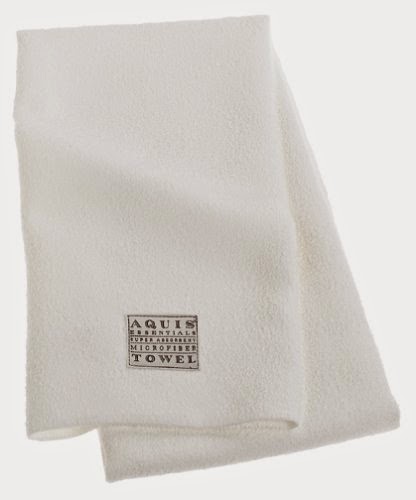
One last thought on eco-friendly towels: For women with thick or long hair, I also recommend a small, microfiber hair towel, like this 19" x 39" version from Aquis ($13, below). I bought mine twelve years ago for many-weeks-long trip to Europe, and used it as my only towel in some of the hostels I stayed in. I think the texture of microfiber would be off-putting for a full-size bath towel, but it is an excellent solution for drying hair. Like the other towels, it is very absorbent, so it will dry your hair and itself quickly.


Finally, if you make the switch, don't send your old towels to the landfill. If they are in good condition, a homeless shelter will likely be happy to take your towels. If they are more worn, your local Humane Society or animal shelter would probably be thrilled to get a donation of your old terry towels.

Plastic-Free Alternatives to Plastic Wrap and Ziploc Bags

Saturday, January 17, 2015

One of my goals for 2015 is to consume less, and in particular to consume less plastic. If we didn't already have enough reasons to avoid plastic, the latest news that replacements for BPA are just as dangerous as BPA certainly has me weary of any plastics that come into contact with my food.

 I've already donated by plastic tupperware to the Goodwill in exchange for glass and stainless steel containers, but I am on the hunt for alternatives to plastic baggies, cling wrap, and even wax paper and tinfoil. Here are a few of the products and projects that have caught my eye:


DIY produce bags made from dishtowels
We have tons of old dish towels that I could easily stitch into produce bags. I love the idea of upcycling towels instead of buying something new to replace our plastic bags.


Ambatalia Linen Dish Covers
Non-coated, these linen covers are elasticized to stretch over bowls.


Beeswrap
This company sells fabric infused with beeswax, jojoba oil and tree resin in a variety of sizes.


Abeego
Similar to beeswrap, Abeego is also fabric coated with a blend of beeswax, jojoba oil and tree resin that is available in a variety of sizes.

How to Avoid Dry-Cleaning and Make Your Clothes Last Longer

Monday, December 29, 2014

Do you want to know how to avoid dry-cleaning and make your clothes last longer? Unlike most New Yorkers, I rarely dry-clean my clothes. I avoid dry cleaning to save money, to preserve my garments, and to avoid the toxic chemicals, namely perchloroethylene, used in the dry cleaning process. (Read more about why the EPA is concerned about dry cleaning here.) The exceptions to my no dry-cleaning policy are a few items like party dresses with complicated construction and my husband's suits. I thought I'd share some of my tips for how to avoid the dry cleaner and some alternatives to dry cleaning that you can try at home.


Don't buy dry-clean only clothes.
This is the simplest way to avoid the dry cleaner: Don't bring anything into your home that requires professional cleaning. This advice is easy to follow for most garments, though it is nearly impossible to find things like blazers, suits and winter coats that can be washed at home.

Ignore the label.
Many manufacturers label clothing items as dry-clean only that can actually be washed. Manufacturers err on the side of dry-cleaning to avoid unhappy consumers who might wash something incorrectly and ruin a garment.

Instead, look at the fiber content and garment construction.
Take a look at the materials that make up your garment. Wool, cotton, linen, silk and many synthetic fibers can all be washed -- either in a machine or by hand. The trick is knowing the best way to care for each fiber. This "Can I Be Washed?" chart is a very handy guide to what fibers can and cannot be laundered. In terms of construction, anything with padding, boning, pleating or elaborate detail is going to be challenging to wash (again, avoid buying these items in the future).


Learn how to hand-wash.
Sweaters can be easily hand-washed at home. The key is to use lukewarm water, gentle agitation, a neutral soap (I like The Laundress's Wool and Cashmere Wash; you can buy it here), a place to  and some patience. Here's a great video in which Martha Stewart shows you how to wash and block a sweater. 

Wear garments multiple times.
Not everything needs to be washed every time you wear it -- really! Laundry has become so easy today that people throw even the most minimally soiled garments into the wash. If you've only worn something once, it may have another wear (or ten!) in it. If you wear a layer under a wool or cashmere sweater, you can probably get at least a dozen wears out of it, if you don't spill on it. Dark jeans can be word until they show dirt or have lost their shape altogether.

Refresh your garments between uses.
To extend the time between washings or dry cleaning, do a little maintenance between wearings of a garment. If I have wrinkled a skirt, blazer or pants, but not really gotten it dirty, I will lightly mist the piece with water from a spray bottle and hang it in a place where it can fully dry. I find the water gently refreshes the fabric and loosens the wrinkles; you can also purchase various "refresher" sprays, but I would check with the Environmental Working Group's ratings for fabric and upholstery deodorizers before purchasing anything (Febreeze products, for example, contain hormone disrupters and carcinogens). I'm also curious about DIY options, but have never tried them myself.


Steam!
A little steam goes a long way towards reviving a garment. I've had a My Little Steamer for more than a decade and I can't recommend it highly enough. It is almost as powerful as a professional steamer and is so easy to use. After you've refreshed a garment with a little water and some airing, a steaming will make it look truly fresh again. I imagine the steam also has some sanitizing properties. One tip: After you steam a garment, let it rest for 20-30 minutes, so that the moisture evaporates. If you put on a freshly steamed garment, it may just wrinkle back up if it's still damp.

Spot clean.
If you get a small stain on a garment, you may not need to wash the whole thing. Instead, dab the dirty spot with a barely damp cloth to remove any visible dirt. I'm also a big fan of Simply Spotless's fabric cleaner, which can be applied directly to a stain and does not need to be rinsed out.

Gentle wash and air-dry shirts.
Almost anything made of linen or cotton, or a blend in which linen or cotton is more than 50% of the fiber content can be machine-washed in warm water. For anything delicately constructed, use the "hand washable" or "delicates" cycle. For regular old button-down shirts and other sturdier garments, use the "permanent press," which is a bit more gentle than the regular cycle. Then, air dry the garment to save it the abuse of the dryer. I dry all my shirts on a regular hanger buttoned up. I find that oxford cloth shirts come out looking almost wrinkle-free using this method, but thinner weaves may need a pressing or a steaming after they have dried.

Cold wash and line-dry jeans.
I doubt you'd dry-clean your jeans, but here's how to make that dark wash last longer. Wash your denim turned inside out (zippered and buttoned) in cold water. Turn them right-side out, give them a hearty shake and dry them on a rack or a clothesline.

Air-dry all your delicates.
We refer to bras and panties as "delicates," but the truth is that most of these garments are pretty sturdy because of their elastic content. I find it's okay to wash them in warm water. Be sure to hook all your bra clasps to avoid snagging. Experts recommend placing them in a mesh bag to wash, but I have yet to invest in one (I find that tangling isn't too much of an issue if you don't overload your washer). Always air-dry bras and panties to make them last longer.

For more tips on how to make your clothes last longer, check out Martha's advice.

Simply Spotless Fabric Cleaner

Saturday, November 22, 2014


Earlier this year, I was introduced to the Simply Spotless cleaning line, and I'll admit I was curious, but a little skeptical. Being eco-conscious, my curiosity was sparked by the company's achievement of the Environmental Protection Agency's Design for the Environment certification for all of their products. My skepticism was founded in the product's designer packaging. What can I say, it just didn't look serious to me, and I figured the chic design was just a way for the company to charge higher-than-normal fees for their cleaning supplies.


Well, boy was I wrong: Simply Spotless Fabric Cleaner is amazing. It has removed so many stubborn stains that it is now my go-to stain treatment, especially for upholstery fabrics because it doesn't need to be washed out. A half-full glass of wine spilled on our light-colored sofa (my fault!) and fear gripped my chest. Yes, the slipcovers are washable, but it was a lot of wine, and a couch is a major investment piece. I covered all the stained spots with the Simply Spotless, and the stains were gone in the morning--really, there was no trace of the wine. It has also worked on old stains that had been sitting for who knows how long. I think this fabric cleaner is so effective that the $18 price tag is a bargain.

The company was founded by a mother-daughter team and is made in New York City, which is another reason I am happy to pay the higher price for this product.

(I should note that I also tried the Simply Spotless Glass and Surface Cleaner, and while it worked just fine, I wouldn't spend the extra money on it; I have yet to try the Wood Cleaner.)


Less

Saturday, November 08, 2014


I’ve been thinking a lot about less. Buying less, spending less, owning less, using less--generally being less of a burden to this planet. I’ve been living in New York City for sixteen years now, and in that time I have acquired so much stuff. Sometimes I look around, and I wonder, “Where did all this come from?”

It’s hard to remember what it was like living in my first apartment in a 6' x 8' room with a mattress, only enough clothes to fit in a very small wardrobe, a plank on brackets for desk, a chair, just four plates and four bowls, a single sauté pan—I owned so little, but my life was no less full.

I don’t aspire to return to my teenage lifestyle, but I do want to get back to the basics. And yet it is so hard to get rid of things, isn’t it? For example, why is it so hard to get rid of that shirt you only where two times a year? Is it because we worry that we might need it someday. Getting up the nerve to say to yourself, "No, I really don't need it," can be hard.

It’s not just about decluttering. Simultaneously, I am intrigued by the idea of creating less waste. Reading about people who aspire to a “zero waste” home (in other words, to create no trash) inspires me to do a better job of buying things that come with minimal and easily recycled packaging; it also helps motivate me to seek out less wasteful and more ecological alternatives for every item that comes into my home.

I tell you all this to let you know that I plan to write more about living with less. When I talk like this, my husband jokes about becoming minimalists, who live in a studio apartment with tatami mats as our only furnishings. That’s not the answer, but I do think that we could all think about how we might live smaller, lighter, and ultimately more freely, less weighed down by what we consume.

The Ultimate Lunchbox

Wednesday, March 26, 2014

Most days I bring my lunch to work--I always have. As an editorial assistant, it wasn't a choice: I brought cans of soup, apples, and peanut butter and jelly sandwiches because that was all my budget afforded (I hadn't yet truly embraced home cooking). These days, it's a choice, and I'm happier for it. In midtown Manhattan, lunch will almost always run you $5 and most often costs something more like $8 or $10. I figure bringing me lunch saves me hundreds, if not thousands a year.I use up leftovers and I know what goes into my lunch. The only drawback is that on a busy day, I often won't leave my desk at all.

Lately, I've worked on perfecting my lunch-bringing routine, and I wanted to share a few products and tips for brown bagging your mid-day meal. Here are some of the things I have learned and products I adore:


A dish towel is a great lunch accessory: Use it to wrap fragile fruits like bananas and peaches while they are in transport, then use it as a napkin for your meal. IKEA's Elly dish towels are a bargain at $1 a piece--we have tons of these at my house, but any cloth towel will work.


I was mightily impressed when I received some samples of Klean Kanteen's food canisters to test last year. They are as lightweight as plastic tupperware, but so, so much better. Because they are metal they don't absorb odors or flavors. Plus, they're more attractive and nicer to eat out of than a piece of plastic. I personally prefer the non-insulated version because they are lighter (and my purse is heavy enough as it is), but if you need to keep your food hot, or cold, the insulated ones could be handy. Klean Kanteen Food Canisters, $18 to $35, kleankanteen.com.


In the photo business, you'll often come across miniature jam jars in the catering provided on shoots (you'll also find them in nicer continental breakfasts at hotels). I soak the labels off and use them as the tiniest of containers, and they're super-handy for lunches to-go. I keep a mini jar of kosher salt in my desk drawer and fill others with salad dressing when I bring a salad for lunch.
Photo: Sweet Paul


I found two of these SIGG lunch boxes at a thrift store for $1 a piece, and bought them on a whim. Now I bring my lunch in them nearly every single day. Like the Klean Kanteen canisters, they are super lightweight and don't get smelly (hurray!). They're also pretty darn spill-proof. The price seems high, but I promise, these are a worthwhile investment. SIGG Aluminum Box Mini, $32, mysigg.com
If you want to tote coffee with you on your commute, this is my new favorite travel mug (with one caveat!). Of all the travel mugs I have tried Contigo's is the most spill-proof of the bunch: You can literally throw it into your purse because it's natural position is sealed shut and you must push a button to release the coffee. It's also easier to clean than other models and again, I like the aluminum's impermeability. The one drawback of this mug is that it does not fit into the cup holder of my 2002 Subaru (that said, Subaru has terribly-designed cup holders!). West Loop Stainless Travel Mug with Open-Access Lid, $21, gocontigo.com.


Don't use the plastic cutlery in your office (wasteful and so unpleasant to eat off of), don't bring your home flatware to work (you'll likely lose it) and don't go buy any fancy camping flatware (save your money for that SIGG lunch box. Instead, poke your head into a thrift store and buy yourself a single fork, spoon and knife, which will probably cost you less than a dollar.
Photo: Faire Notions


This is not the water bottle I use, rather it is the more attractive model of the one I use. I like Klean Kanteen's water bottles because they are simple and they fit in the aforementioned cup holder of my car. If you're using your water bottle to work out, opt for a model with a "sport cap," but if you're tossing this in your purse or bag, don't tempt fate, opt for the sealed-tight at all times top. (I actually have both a loop cap and a sport cap for my bottle so I can switch between the two.) The Reflect Kanteen, $35, leankanteen.com. 

What about you? What do you recommend for bringing your lunch to work? I'd love to hear your comments.

Mostly Vegan

Monday, February 17, 2014


A few weeks back, I looked up and I realized I'd been on a red meat bender. Two dinners out had featured steaks, a special dinner at home had been a rack of lamb, and a cold, miserable day at work had lead to a delicious meatball lunch--you get the idea, I was eating a ton of red meat. While I love a nice steak here and there, I believe that meat of any kind should be eaten as a treat, not as an everyday food. My carnivorous behavior made me stop and consider my diet, and I decided I needed to make a change.

I'd heard about Mark Bittman's vegan before 6 pm concept (I interviewed him for New York Runner magazine a few years back), and decided I might give it a try. I even bought his book, VB6: Eat Vegan Before 6:00 to Lose Weight and Restore Your Health . . . for Good to help motivate my switch to plant-based mornings and afternoons. The book didn't offer me much menu inspiration, but I'm already an avid cook and not a big meat eater (it's definitely geared towards someone whose diet is further away from a vegan diet). However, I really like that Bittman includes a section called Building Blocks, which encourages readers to cook big batches of things like grains and beans to use as the base for many meals. While the book is packaged as a diet book of sorts, I think that Bittman really believes everyone should be switching towards a more plant-based diet, both for our health and for the health of the planet, and he thinks that a mostly vegan diet is something most people can manage--I agree.

After a week and a half, I can say that the VB6 concept is easily sustained for anyone willing to do a moderate amount of cooking. For breakfast, I ditched my usual yogurt for soy or almond milk (though I cheated with a dash of real milk in my coffee, which Bittman confesses he did at first too). Oatmeal with fruit is just fine without milk, and toast with jam or nut butter, is a vegan-friendly pantry breakfast. For lunch, I made many meals, but I also bought meals both to-go and in restaurants and had no trouble finding vegan options (admittedly, I'm located in cosmopolitan New York City). Vegan soups and salads are pretty easy to find anywhere.

I did notice a few interesting things that happened while sticking to a vegan diet before dinner. First, it became a lot easier to choose the healthy option when dining out. When out to lunch, I wasn't tempted by the cheeseburger on a menu; instead my eyes went to a slow-cooked black bean dish. Second, I found myself working more variety into my meals, instead of just the usual apples and oranges, I picked up some kiwis at the market. When cooking oatmeal, I decided to switch things up with some dried apricots and strawberries, instead of banana and raisins. As a mid-day snack, I made myself some popcorn with olive oil. Finally, I found myself more ecologically aware; when ordering a vegan lunch or shopping for plant-based meals, you're consciously making an effort to help save the earth, so I found myself saying, no thank you to the plastic spoon offered with my soup or the plastic bag to carry my groceries. (I try to avoid disposables like that on a regular basis, but I've been more vigilant  recently.)

So, for now, I'm sticking with Bittman's rule of eating vegan before dinnertime. Of course, there will be times when I'll break the rules, but that's the beauty of the concept: It allows for flexibility. What about you, could you go vegan most of the time? Why or why not? I'd love to hear your thoughts.

Summer Vegetable Ceviche

Tuesday, July 23, 2013


The August issue of Food & Wine is all about "vegetables now," and it's a must-read for any home cook interested in expanding their vegetarian repertoire. There were several recipes and techniques in the issue that I bookmarked to try, including the vegetable "ceviche" on the cover (above). 

The "ceviche" recipe is essentially a bunch of vegetables tossed with a classic ceviche marinade made of lime juice, oil, jalapeño pepper, shallots and scallions. (I made the recipe using frozen edamame in lieu of shelling beans, and they worked just fine.) This clever veggie idea comes from the couple behind the website GreenKitchenStories.com and authors of Vegetarian Everyday, both of which are now on my to-read list. 

If you like ceviche and you like vegetables, I would highly recommend adding this to your summer recipe rotation. My husband's response to the dish was, "Why haven't we been making this all summer?" I bet you'll ask yourself the same thing. 

Summer Vegetable "Ceviche"
From Food & Wine magazine

1 cup fresh baby lima beans (from about 1 1/2 pounds in the pod) or other shelling bean
1 teaspoon finely grated lime zest
1/3 cup fresh lime juice
1/4 cup extra-virgin olive oil
1 scallion, thinly sliced
1 jalapeño, seeded and thinly sliced
1 small shallot, thinly sliced
Sea salt
1 1/2 cups fresh corn kernels (from 2 ears)
2 nectarines, cut into thin wedges
1 Hass avocado, cut into 1/2-inch cubes
1 large orange bell pepper, finely julienned
1 pint heirloom cherry tomatoes, halved
1/2 cup coarsely chopped cilantro

1. In a small saucepan of salted boiling water, cook the lima beans until tender, about 10 minutes. Drain the beans and rinse under cold water.
2. In a large bowl, whisk the lime zest and juice with the olive oil, scallion, jalapeño and shallot; season the dressing with salt. Gently fold in the lima beans, corn, nectarines, avocado, orange pepper and tomatoes. Refrigerate the “ceviche” for at least 2 hours. Fold in the cilantro just before serving and serve the “ceviche” chilled.

Note: The salad can be refrigerated for up to 8 hours. F&W says it serves 8, but I'd say it's more like 6.

Want more summer salad ideas? Try these

Tomato Salad with Olives and Lemon
Creamed Corn with Gorgonzola, Tomatoes and Pine Nuts
Carmine's Caesar Salad Dressing

Heidi Swanson's Little Quinoa Patties

Friday, July 08, 2011


A while back I wrote with excitement about Heidi Swanson's cookbook Super Natural Every Day. I've been cooking out of it off-and-on since I purchased it, and so far, I've been a little disappointed (possibly because I had such high expectations for it). However, last night we tried the Little Quinoa Patties and they were a sure winner; it makes me eager (and happy!) to keep trying more recipes from this book, despite having started off on the wrong foot.

The batch makes A LOT of patties. We cooked three small ones for each of us to go with a big salad, and I cooked another four today for lunch and there's still a good amount of quinoa patty batter in the fridge. Having cooked them the day after, I highly recommend preparing the mixture at least a few hours in advance, if you have time. My day-after patties stayed together much more nicely than the fresh ones last night. Also, please note: Your patties will look nothing like the ones in the photo above. They will be messy, misshapen and very handmade. Don't worry--they'll still taste great.

Also, I used fresh basil instead of chives and panko breadcrumbs instead of whole wheat ones because that's what we had on-hand and they were delicious -- I bet most herbs would work well. Also, the patties were a little dry on their own, so we whisked some mayonnaise and Sriracha together for a simple spicy sauce to dab on top (perhaps not so "super natural," but super tasty).


Little Quinoa Patties
Adapted from Super Natural Every Day

2 1/2 cups/12 oz/340 g cooked quinoa*, at room temperature
4 large eggs, beaten
1/2 teaspoon fine-grain sea salt
1/3 cup/.5 oz /15 g finely chopped fresh basil
1 small yellow or white onion, finely chopped
1/3 cup/.5 oz/15 g freshly grated Parmesan
3 cloves garlic, finely chopped
1 cup/3.5 oz /100 g panko bread crumbs, plus more if needed
Water, if needed
1 tablespoon extra-virgin olive oil

Combine the quinoa, eggs, and salt in a medium bowl. Stir in the basil, onion, cheese, and garlic. Add the bread crumbs, stir, and let sit for a few minutes (or several hours!) so the crumbs can absorb some of the moisture. At this point, you should have a mixture you can easily form into twelve 1-inch/2.5cm thick patties. I err on the very moist side because it makes for a not-overly-dry patty, but you can add more bread crumbs, a bit at a time, to firm up the mixture, if need be. Conversely, a bit more beaten egg or water can be used to moisten the mixture.

Heat the oil in a large, heavy skillet over medium-low heat, add 6 patties, if they'll fit with some room between each, cover, and cook for 7 to 10 minutes, until the bottoms are deeply browned. Turn up the heat if there is no browning after 10 minutes and continue to cook until the patties are browned. Carefully flip the patties with a spatula and cook the second sides for 7 minutes, or until golden. Remove from the skillet and cool on a wire rack while you cook the remaining patties. Alternatively, the quinoa mixture keeps nicely in the refrigerator for a few days; you can cook patties to order, if you prefer.

*To cook quinoa: Combine 2 cups/12 oz/340 g of well-rinsed uncooked quinoa with 3 cups / 700 ml water and 1/2 teaspoon fine-grain sea salt in a medium saucepan. Bring to a boil, cover, decrease the heat, and simmer for 25 to 30 minutes, until the quinoa is tender and you can see the little quinoa curlicues. (NOTE: I halved this and had exactly the right about of quinoa for the patty recipe.)

Cannellini Bean Salad With Shaved Spring Vegetables

Saturday, June 18, 2011


I am thrilled that David Tanis now has a weekly column in the New York Times food section. I am a big fan of both of his cookbooks The Heart of the Artichoke and A Platter of Figs, and his recipes are the kind of food I want to cook (and eat) daily. I like that the new column is focused on cooking in a small kitchen, though I have never not made a recipe because my kitchen was too small. In fact, I can't imagine how having a larger kitchen would change my cooking habits, but who knows, I've never had a large kitchen.

Last night I cooked a variation on Tanis's first recipe for the Times: Cannellini Bean Salad With Shaved Spring Vegetable. I was prepared to follow his recipe to the letter, but it didn't work out that way. First, I forgot to get a bulb of fennel when I was at the market (and I was too lazy to go back). And second, I just couldn't bring myself to mandolin the vegetables. I own a mandolin, and on rare occasion I have actually used it, but frankly, I hate the thing. I don't know why I detest the mandolin so much, and I recognize that it is, in fact, the best way to get thin even slices of vegetables.

So, instead of carefully mandolining the veggies, I sliced the radishes as thinly as I could and I chopped the asparagus into 1-inch pieces and blanched them for about two minutes in hot water, figuring that they would taste a little better that way. Also, I used a whole bunch of asparagus, since I'd forgotten to get the fennel. The salad was delicious, and the vinaigrette had a wonderful, complex flavor with the anchovies and fennel seed. We served it with pan seared arctic char and a simple salad of baby arugula that I tossed with the remainder of the dressing. I'll include Tanis's recipe as he wrote it, but feel free to adjust as you like -- I certainly did.

Cannellini Bean Salad With Shaved Spring Vegetables
From The New York Times

FOR THE VINAIGRETTE:
3 tablespoons lemon juice, or as needed
Finely grated zest of half a lemon
1 teaspoon Dijon mustard
1/2 teaspoon ground fennel seed
4 to 6 anchovy fillets, rinsed and chopped
Salt and pepper
1/2 cup extra virgin olive oil

FOR THE SALAD:
2 cups cooked cannellini beans, drained
Salt and pepper
Pinch red pepper flakes
6 to 8 large, fat asparagus spears, snapped and peeled
6 radishes
1 small fennel bulb, trimmed
1 small sweet spring onion, or a few scallions, finely chopped
Chopped parsley, basil or dill, for garnish

1. To make the vinaigrette, whisk together the vinaigrette ingredients. Adjust lemon juice, salt and pepper to taste.
2. To assemble the salad, place the beans in a large bowl. Pour half the vinaigrette over the beans and toss lightly. Season with salt, pepper and
red pepper flakes.
3. Using a sharp mandolin — and a hand guard — carefully slice the asparagus spears lengthwise to about the thickness of a penny. Slice the radishes and fennel to the same thickness. Lay the shaved vegetables and chopped onion or scallions in a shallow bowl. Season with salt and pepper, and dress them very lightly with a few spoonfuls of vinaigrette, turning gently to coat.
4. Spoon the beans onto a serving platter or individual plates, then cover the beans with the shaved vegetables. Add a little more vinaigrette over the top. Sprinkle with chopped parsley, basil or dill.
Yield: 4 to 6 servings.

Homemade Iced Tea

Wednesday, September 08, 2010

Bottled iced tea has to be one of the most wasteful and overpriced beverages, especially when you can make a pitcher yourself for just a few cents. All summer I've been brewing myself pitchers of custom tinctures, and one favorite combo has been two Tazo Ginger-Green tea bags paired with two mint tea bags.

From the age of 14 until almost 21, I held jobs at a number of different coffee shops. In fact, I still get recognized on the street at the "Grey Dog Girl" despite the fact that I haven't worked there since 2001. One thing I learned during my barista years is that a cup of hot tea chilled will become cloudy. To prevent the cloudiness, you can brew a small concentrated quantity of hot tea (as you can see me doing above) and then dilute it with cold water for a clearer cup of iced tea.
 

the little house in the city © All rights reserved · Theme by Blog Milk · Blogger