Eat Beans for Climate Change

Tuesday, November 07, 2017

A while back I read this article on TheAtlantic.com about how swapping our beef consumption for bean consumption would make a huge impact on greenhouse gas emissions. According to the article, "If every American made one dietary change: substituting beans for beef. They found that if everyone were willing and able to do that—hypothetically—the U.S. could still come close to meeting its 2020 greenhouse-gas emission goals... That is, even if nothing about our energy infrastructure or transportation system changed—and even if people kept eating chicken and pork and eggs and cheese—this one dietary change could achieve somewhere between 46 and 74 percent of the reductions needed to meet the target."

This statistic has stuck in my head, and I've been striving to eat more vegetarian meals at home (even though we rarely cook beef, I figure replacing beans for other animal protein also helps the cause!). I know it's hard for people to make the switch from the standard meat + starch + vegetable = dinner equation, so I thought I would share a few favorite bean and lentil recipes that make great main dishes for weeknight meals.

Deborah Madison's Lentil Salad (above) from the original Greens Cookbook is a classic. Find the recipe on Food52.com (photo by Mark Weinberg).

I've been making Heidi Swanson's White Beans and Cabbage for years—it's a great one-dish meal. (Also a great way to use all the cabbage I got in this year's CSA!)

Pair this chickpea and cauliflower dish with a big green salad and you've got a hearty dinner.

Another long-time favorite is Melissa Clark's Red Lentil Soup with Lemon. Read her commentary, if you need convincing.

Melissa has a ton of bean and lentil dishes in her new book Dinner: Changing The Game that I am dying to try, including this Black Bean Skillet Dinner.

A recipe inspired by the late great Chickpea Sandwich that used to grace the menu at 'wichcraft, and a excerpt of the original recipe from Tom Colicchio's book.

Amy Chaplin's Soaked Oats and Chia

Thursday, July 09, 2015

Here's an ideal breakfast for the hot and humid mornings we've been having in New York City this week: Soaked Oats and Chia from Amy Chaplin's excellent At Home in the Whole Foods Kitchen. I bought this book over the winter, and I've done quite a bit of cooking out of it in the months since. The thing I love about this book is that it give me new ideas. Soaked rolled oats for breakfast? I'd never eaten them before Chaplin suggested it.

Yesterday, Amy Chaplin posted a lovely video of this recipe on her Instagram account, and it reminded me to start another batch. Double (or triple!) the batch and keep it in your refrigerator for a week's worth of healthy, easy breakfasts. Here's the recipe from the book below. Once you've made it a few times, you won't even need to look at the written instructions

Soaked Oats and Chia
With Almond Milk, Flax, and Wheat Germ

"Creamy, light, and satisfying, this has been my staple warm-weather breakfast for many years. It’s just right for busy mornings, as it is best made ahead of time and travels well in a small jar. I recommend eating it at room temperature, so if you remove a portion from the fridge as soon as you get up, it’ll be ready by the time your breakfast hour rolls around."

Ingredients:

• 3/4 cup regular rolled oats
• 2 tablespoons chia seeds
• 1 tablespoon ground flax seeds
• 1 tablespoon wheat germ
• 1/4 teaspoon cinnamon
• 2 cups almond milk

 To Serve:

• Fresh berries
• Homemade almond milk
• Maca root powder, optional
• Hemp seeds, optional


Combine the oats, chia, flax, wheat germ, and cinnamon in a bowl; mix well. Pour in almond milk and stir until everything is evenly combined. Set aside for 20 to 30 min­utes at room temperature, or store in a jar and place in the fridge for 8 to 12 hours. The mixture will keep up to 4 days in the fridge. Serve topped with berries, a splash of almond milk, and a teaspoon of maca root powder and hemp seeds if you like. Serves 2.

Photo by Johnny Miller.

Yes, You CAN eat well on $4 a Day (Almost)

Thursday, April 02, 2015

I bet you're wondering how our $4 a day food experiment went. While we didn't stick to the budget, I'd call the experiment a success. We spent $65 on groceries last week, which is just over $4.50/person per day. However, we also ate a bunch of things we already had in the fridge and pantry, and my best guess for the cost of those items is an additional $20 (a very rough estimate). If you add the two together, that brings us to $85 total or about $6/person per day. While I didn't meet the goal I'd set, I also continued to shop like I normally do; for example, I bought organic milk, eggs, and apples. If I had swapped for conventional products, we probably could have cut the budget down further.

I loved this experiment, and I would recommend it to anyone who wants to cut back on their spending. Here are some of the things I learned and experienced during our week of extreme budget eating:

Plan, plan, plan
If you want to save money on groceries, it really helps to plan a full week's worth of meals in advance and shop for those meals in one big trip. Instead of going to the store every other day on my way home from work, I made did one big shop at the beginning of the week.

Be flexible
However, you also need to be flexible. Reducing your daily food costs has a lot to do with improvising and making do with what you've got. I made some chicken soup based on a recipe I have, but didn't have all the ingredients--rather than run out to buy leeks and mushrooms, I swapped onions for the leeks, and skipped the mushrooms all together. Sunday lunch was a real hodgepodge of what's left in the fridge, but we didn't go hungry.

Saving money takes time
I will admit I spent a lot of time making our budget meal plan work. In addition to making breakfast every morning, I made lunch and dinner for my husband every single day when normally we'd each eat a few meals out. Cooking grains, beans and homemade stock also took time.

Wholesale clubs are your friend
Our Costco membership definitely helped us stay on-track with our budget. Among the Costco purchases that made it into our weekly meals were nearly a week's worth of salad greens for $4, two-dozen organic eggs for $7, and two organic chickens for $24 (we froze one to eat later).

Surprise budget busters
There were a few items that really added up to my daily total that I would cut out if I were rying to stick to a strict budget. For example, just five dried dates (from Costco!) tallied up to 50-cents--1/8 of a $4/day budget!  Frozen berries were also surprisingly pricey when I broke down the per serving cost.

Super savers
Oatmeal has got to be the cheapest, most nutritious breakfast around. I divvied up the cost of each serving of rolled oats from a giant Costco box and it came to just 11-cents per serving. Yes, it's a little more when you add some fruits, a handful of nuts and milk, but it really is a cheap, healthy way to start the day. Homemade popcorn is also a great good-for-you and affordable item--I figure that a single serving of my organic home-popped kernels is about 10-cents--and boy, does it fill you up.

Necessary splurges
Flavor boosters like citrus and herbs are what really make a meal sing. If you cut them out, you'd save money, but boy, would your diet be less interesting. I wouldn't give up the lemons, limes, fresh herbs and dried spices I used even for increased savings.

It's cheaper to grow your own
I have a big pot of rosemary in our apartment, and used it throughout the week to season dishes. It cost nothing, and made me think that I should have pots of all kinds of edibles growing in my window sill, so I don't have to buy those pricey bundles at the supermarket every time I want the taste of fresh herbs.

Going out is more expensive than you think
We ate one meal at a friend's house (but we also served dinner to our siblings) last week, so I figure those two cancelled each other out budget-wise. However, I also met a friend for lunch one day. My lunch bill (for a salad, a soup, and a glass of seltzer) was $25, including tax and tip. That one lunch could have funded five days of home-cooked eating--yikes!

A bag lunch is no less fun
On the weekend, my husband and I often eat lunch out during our daily wanderings. It's nothing fancy, usually eggs in a diner or sandwiches from our favorite takeaway spot. This weekend, we packed a big snack to take with us, and ate bowls of rice and beans later in the afternoon at home. I didn't miss eating out one bit, and I was happy to have saved the $20+ we would have spent on even the most modest restaurant meal.


Do you have a pressure cooker?

Sunday, March 29, 2015

Let's talk about pressure cookers.

Recently, I purchased Amy Chaplin's At Home in the Whole Food Kitchen, which is an inspiring cookbook, and I'll definitely write more about it later. However, the book is more than a collection of recipes: Many of the book's pages are devoted to how Chaplin stocks her pantry and prepares her weekly staples. Chaplin is an avid proponent of owning a pressure cooker, in particular, for making beans. She recommends a 5-quart model as the ideal size for cooking 2 cups of beans or soup for four people.

Meanwhile, Bon Appetit, one of my favorite food magazines, devoted a page to its love of the pressure cooker. Suddenly, it seems everyone is using a pressure cooker!

I've never owned a pressure cooker, and I'm fairly resistant to buying additional kitchen gadgets, but all this talk has gotten me thinking about owning one myself. For beans alone, it would be a handy thing to have. However, at more than one hundred dollars, a pressure cooker is a pretty significant investment. Though it would also probably pay off--and not just in saved time: If you can make beans in 20 minutes, you're more likely to make them from scratch than to reach for a can, and a pound of dried beans costs less than a 13.5 oz. can of cooked beans. Not only are pressure cookers economical, because they cook food in a reduced time, they save energy. Better taste, cost savings, and an ecological choice? I've almost convinced myself to take the plunge. Here are some recommended models:

Bon Appetit's test kitchen recommends Kuhn Rikon's Duromatic Pressure Cooker, $219.99 on amazon.com, and two other models. Chaplin also likes the Kuhn Rikon brand.

My in-laws, who are avid pressure cooker users, have their eye on WMF Perfect Plus's Pressure Cooker, $159.87 for the 4 1/2-quart model on amazon.com. While, the food editor at my office likes the models by Fagor. 

What about you? Do you own a pressure cooker? If so, do you have a model that you love? Anything you like to cook in yours? I'd love to hear more about why I should consider investing in a a pressure cooker of my own.

Bean + Protein Dinners

Sunday, December 28, 2014

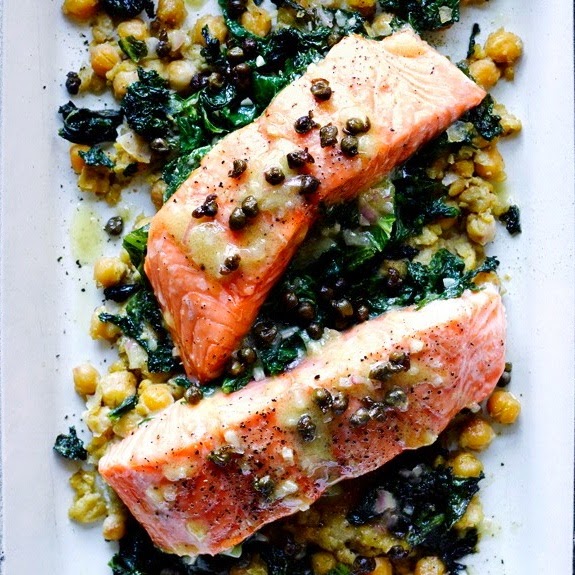
Recently, I tried out two recipes that make use of a can or two of beans paired with a piece of protein that cooks on top of the beans. It's a technique that could be used for an infinite variety of legume and protein combinations. The two dishes I made were very different from one another, but both were delicious: The first is a white bean and lamb dish from the late great Everyday Food, and the second is a Bobby Flay recipe for slow-roasted salmon with chickpeas and greens from Bon Appetit. These are the kind of meals that make a better-than-average weeknight dinner or a fairly impressive entrée for guests. 

A few quick notes: I halved the lamb recipe, and I would recommend you stick to the full four-serving version, so you can really get the beans nice and thick and saucy (it worked on a smaller scale, but it got a little dry with less in the pan). For the salmon recipe, I couldn't find mustard greens, so I used a bunch of chard and one bunch of red chard, which worked out beautifully -- I'd definitely do two bunches of greens, not just one. I also upped the garlic to three cloves because, well, I like garlic. Here are the recipes; give them a try:


Lamb and White Beans with Rosemary
From Everyday Food, November 2006

Ingredients:

2 tablespoons olive oil
4 loin lamb chops, (each about 6 ounces and 1 1/4 inches thick)
Coarse salt and ground pepper
1 medium onion, finely chopped
4 cloves garlic, sliced
1 tablespoon chopped fresh rosemary, (or 1 teaspoon dried), plus more for serving (optional)
1/4 to 1/2 teaspoon red-pepper flakes
2 cans (15 ounces each) cannellini beans, drained and rinsed

Instructions:
1. In a large skillet with a lid, heat oil over medium-high. Season lamb generously on both sides with salt and pepper. Place in skillet; cook until browned, 3 to 4 minutes per side (lamb will finish cooking in step 4). Transfer chops to a plate (keep oil in skillet); loosely cover with aluminum foil, and set aside.
2. To skillet, add onion, garlic, rosemary, and red-pepper flakes; season with salt and pepper. Cook, stirring frequently, until onion has softened, 3 to 5 minutes.
3. Add beans, sun-dried tomatoes, and 1/2 cup water. Bring to a boil, then reduce heat to medium-low; cook until mixture is slightly thickened and saucy, 4 to 6 minutes.
4. Place chops on top of beans in skillet (adding any juices that have accumulated on plate). Cover skillet, and simmer until meat is medium-rare, 3 to 4 minutes. Serve chops with beans, and garnish with rosemary, if desired.

Serves 4


Slow-Cooked Salmon, Chickpeas, And Greens
From Bon Appetit, March 2014

Ingredients:
Salmon:
2 tablespoons olive oil, plus more
1 15.5-oz. can chickpeas, rinsed
½ teaspoon ground cumin
Kosher salt and freshly ground black pepper
3 small garlic cloves, thinly sliced
2 bunches small mustard greens, ribs and stems removed, leaves coarsely chopped
1 heaping teaspoon honey
4 6-oz. skinless salmon fillets
Vinaigrette and Assembly:
½ small shallot, very finely chopped
2 tablespoons fresh lemon juice
1 teaspoon Dijon mustard
½ teaspoon honey
Kosher salt and freshly ground black pepper
¼ cup olive oil
¼ cup vegetable oil
2 tablespoons capers, rinsed, patted dry

Instructions:
Salmon:
1. Preheat oven to 250°. Brush a large baking dish with oil. Combine chickpeas, cumin, and 1 Tbsp. oil in a medium bowl. Mash about half of chickpeas with a fork; season with salt and pepper. Transfer chickpea mixture to prepared dish.
2. Heat remaining 1 Tbsp. oil in a large skillet over medium-high heat. Cook garlic, stirring, until fragrant, about 30 seconds. Add mustard greens and cook, tossing, until slightly wilted, about 1 minute. Add honey and ¼ cup water; season with salt and pepper. Cook, tossing, until greens are completely wilted, about 2 minutes. Transfer to dish with chickpea mixture. Season salmon with salt and pepper; arrange over greens and chickpea mixture and drizzle with oil. Bake until salmon is opaque in the center, 30–35 minutes.
Vinaigrette and Assembly:
3. Whisk shallot, lemon juice, mustard, and honey in a small bowl; season with salt and pepper. Gradually whisk in olive oil; season with salt and pepper.
4. Heat vegetable oil in a small saucepan over medium-high heat. Cook capers until opened and crisp, about 30 seconds; drain on paper towels.
5. Drizzle salmon with vinaigrette and top with capers.

Serves 4

Cold-Weather Menu from Lucques

Tuesday, December 02, 2014

Last fall, I made this absolutely delicious menu that ran in Food & Wine magazine. The recipes are from Lucques, a restaurant in Los Angeles that I will be eager to visit the next time I find myself in L.A., based on the caliber of this meal. The restaurant's chef, Suzanne Goin, has also written Sunday Suppers at Lucques, which I'll add to the long list of cookbooks I hope to someday own. 

This is a sophisticated yet hearty menu for a cold fall or winter night. I plan to make it again int he coming weeks. It'd be great with Marcus Samuelsson's excellent apple cake for dessert.

Bratwurst with Mustardy Fried Potatoes and Braised Cabbage
From Food & Wine

1/4 cup diced shallots
1/4 cup red wine vinegar
1/4 cup whole-grain mustard
1/4 cup Dijon mustard
3/4 cup plus 2 tablespoons extra-virgin olive oil
Kosher salt
Freshly ground pepper
1 1/2 pounds Yukon Gold potatoes
16 bratwursts
1 teaspoon thyme leaves
2 tablespoons chopped parsley
Citrus-Spiced Red Cabbage (recipe below)
1 bunch of watercress, thick stems discarded

1. In a bowl, combine the shallots and vinegar and let stand for 5 minutes; stir in both mustards. Whisk in 3/4 cup of the oil and season the vinaigrette with salt and pepper.
2. In a pot of salted boiling water, cook the potatoes until tender, 30 minutes. Drain and let cool slightly, then slip off the skins. Break the potatoes into 1 1/2-inch chunks.
3. Light a grill or preheat a grill pan. Grill the bratwursts over moderate heat, turning, until heated through, 10 to 15 minutes.
4. In a large nonstick skillet, heat the remaining 2 tablespoons of oil. Add the potatoes and thyme and season with salt and pepper. Cook over moderately high heat, turning, until golden and crisp, 6 to 7 minutes. Remove the pan from the heat and add 1/2 cup of the vinaigrette and the parsley. Season with salt and pepper and toss to evenly coat.
5. Arrange half of the Citrus-Spiced Red Cabbage on a serving platter. Scatter the potatoes and three-fourths of the watercress over the cabbage and top with half of the bratwursts. Repeat with the remaining cabbage, watercress and bratwursts. Pass the remaining vinaigrette at the table.

Citrus-Spiced Red Cabbage

One 1-pound red cabbage—halved, cored and sliced 1/8-inch thick
1/2 cup fresh lemon juice
1/2 cup fresh orange juice
1/3 cup sugar
1/4 cup duck fat or unsalted butter
1 large onion, thinly sliced
2 teaspoons thyme leaves
1 árbol chile with seeds, crumbled
1/2 teaspoon ground allspice
Kosher salt
Freshly ground pepper
1 1/2 cups dry red wine
1/2 cup port

1. In a large bowl, toss the cabbage, lemon juice and orange juice. Let stand at room temperature for 1 hour, tossing occasionally.
2. Set a large enameled cast-iron casserole over moderate heat for 1 minute. Add the sugar in an even layer and cook without stirring until melted and starting to caramelize, about 3 minutes. Stir in the duck fat. Add the onion, thyme, chile, allspice, 1 teaspoon of salt and 1/4 teaspoon of pepper. Cook over moderate heat, stirring often, until the onion is lightly caramelized, about 7 minutes. Stir in the wine and port and cook over moderately high heat until the liquid is reduced to 2/3 cup, about 5 minutes. Add the cabbage and accumulated juices and 1 teaspoon of salt. Cook over moderate heat, stirring often, until the cabbage is tender and glazed, about 20 minutes. Season with salt and pepper. Serve hot or warm.

Plus: Marcus Samuelsson's Apple Cake

Recipes for Broccoli Stems

Tuesday, November 18, 2014

I'm the kind of cook who hates to waste anything edible. Whether it's the last wedge of lemon, a heel of bread, or some leftover potatoes, I always try to find a way to use everything up. In the spirit of making use of every last bit, I want to share some recipes for broccoli stems.

Many people cut the crowns off their broccoli, cook the florets and toss the stems. However, the stems are perfectly edible. The simplest way to use them is to sauté or roast them right alongside the florets, but I was also intrigued by these dishes that use only the stalks. To prepare stems, I cut off the end and any protruding bits, and peel them with a sharp vegetable peeler (sometimes you need to peel more than one layer to remove the woody exterior). I hope these recipes inspire you to cook every bit of broccoli that you bring home from the store.


I made this Broccoli Stem Salad recipe from Quinciple's blog The Sift, and it was pretty darn good. I added some slivered kalamata olives for an extra kick of flavor. The trick here is to let the stems marinate in the vinaigrette.


Pan-Fried Broccoli Stems from the New York Times sound delicious (and easy to make!).


Bon Appetit offers Sautéed Broccoli with Floret Vinaigrette, a dish from Oxheart restaurant in Houston, TX. This recipe uses the whole broccoli, so isn't really a stem-only recipe, but I bet you could use the technique with a basic vinaigrette and get delicious results.

Also: This recipe from The First Mess for "green goddess" pizza is intriguing--broccoli stem pesto!

Turkey Chili for a Crowd

Wednesday, April 02, 2014


Last night, a bunch of work friends came over for a weeknight gathering. I wanted to cook something that was easy, casual, relatively healthy, wallet friendly and fit for a crowd (a tall order, I know). I've recently fallen in love with Citarella's turkey chili (it's really delicious and a bargain at $5 for a hefty serving), and it inspired me to make a batch of chili for the gang. I couldn't find a recipe that seemed like a close match for the Citarella version, so I made up my own. I still have a ways to go to match the Citarella version, but mine was good enough to share with you here.

I served the chili over brown rice ( with a bunch of garnishes for my guests to choose from. I also baked some cornbread (Jiffy!) in a cast-iron skillet to serve on the side. This recipe makes A LOT of chili. It woudl be great for a party or if you want to freeze some for later consumption.

Turkey Chili for a Crowd
Serves 8+

Ingredients 

4 tablespoons extra-virgin olive oil
2 medium onions, diced
2 yellow or red bell peppers, seeded and diced
2 to 4 chipotle peppers in adobo, minced, plus 2 tsp. sauce
2 teaspoons cumin
1 teaspoon chili powder
2 pounds ground turkey meat
2 28-oz. can diced tomatoes
1 15-oz. can kidney beans, drained and rinsed
1 15-oz. can pinto beans, drained and rinsed
1 cup corn kernels (I used dehydrated, but fresh, frozen or canned is fine)
Salt and pepper

Garnishes: diced avocado, lime wedges, sliced scallions, grated sharp cheddar, chopped fresh cilantro, sour cream

1. Heat olive oil in a large pot over medium heat. Add onion and bell pepper and sauté until tender, 6 to 8 minutes.
2. Add chipotle peppers, their sauce, and dry spices, and sauté for 2 more minutes.
3. Add ground turkey, breaking it up into small chunks with a spoon. Season lightly with salt and pepper. Stir frequently until meat is no longer pink, 6 to 8 minutes.
4. Add beans, tomatoes, and corn to the pot, and stir well. Bring to a boil, and then reduce heat to a simmer. Cook for at least one hour to let flavors meld. Taste, and season with salt and pepper.
5. Serve over brown rice with garnishes, like diced avocado, lime wedges, sliced scallions, grated sharp cheddar, chopped fresh cilantro, and sour cream.

Familiar Vegetables, New Tricks

Tuesday, January 21, 2014


Recently, I've tried out two recipes that treat familiar vegetables in new-to-me, yet simple ways, and I wanted to share these smart, fresh ways to prepare winter veggies.

Back in December, New York Times columnist David Tanis ran a recipe for mashed butternut squash that I tried and loved: You peel and chop the squash and roast it in a foil-covered baking dish with water. A not-so-healthy dose of butter makes it truly delicious. We paired it with seared duck breasts, and they were a lovely combination.

Another new technique I've discovered is "glazing" potatoes, which I discovered through a recipe for Olive-Oil Glazed Potatoes from the The Gourmet Cookbook. In this instance, peeled, sliced potatoes are sautéed on the stove in a pan of water and oil (I used a cast iron skillet). As the water evaporates, the potatoes are left with a glaze of the oil--they're insanely rich for a dish that only uses two tablespoons of oil. The second time I make them I added fresh pepper and a handful of chopped, fresh parsley for color and a little herbal lift.

Mashed Butternut Squash 
From The New York Times

2 pounds butternut squash, peeled, seeded and cut into 1-inch cubes
Salt and pepper
4 tablespoons butter

1. Heat oven to 350 degrees. Put squash cubes in a shallow, wide baking dish. Season with salt and pepper and toss with hands to coat. Pour water in, to a depth of about 1 inch. Dot surface with butter and cover dish tightly with foil.

2. Bake, covered, until squash is tender, about 1 hour. Crush squash to a rough consistency with a potato masher or wooden spoon. Stir to incorporate cooking juices and check seasoning. May be prepared ahead and reheated.

Olive-Oil Glazed Potatoes with Parsley

1 lb russet (baking) potatoes (about 2)
1 1/4 cups water
2 tablespoons extra-virgin olive oil
1 garlic clove, minced
1/2 teaspoon salt
freshly ground pepper
handful of chopped, fresh parsley

1. Peel potatoes and halve lengthwise, then cut crosswise into 1/8-inch-thick slices.
2. Combine potatoes with water, oil, garlic, and salt in a 10-inch nonstick skillet and bring to a simmer. Cover skillet and briskly simmer, shaking skillet occasionally, until potatoes are tender and most of water is absorbed, 10 to 12 minutes.


10 Solutions for a Damp, Humid Bathroom

Sunday, September 22, 2013


We love almost everything about our new apartment, but the windowless bathroom became so hot and humid in the summer that we started calling it Swamplandia. A little effort on our part conquered the humidity problem, and I thought I'd share my advice with anyone else who is looking for a solution to a damp, humid bathroom. Read on for ten tips to dry out a damp bathroom:

Photo above by West Elm (not our bathroom, sadly).

1. Get an exhaust fan installed. In our case, the bathroom had an existing exhaust fan that needed to be repaired. A working exhaust fan made a huge difference, but the exhaust fan alone was not enough to solve our humidity problem.

2. Invest in a small fan. We got a small clip fan for additional air circulation in the room, which seems to really help keep the air dry.


3. Squeegee after every shower. Wicking the water off of the shower walls with a squeegee means the water goes down the drain, not into the air.

4. Stretch the shower curtain taut after you shower. The water droplets on the curtain will evaporate more readily if the curtain is stretched out than if it's bunched up.


5. Try Damp Rid. Researching solutions for a damp bathroom, I came across DampRid. I can't say for sure how effective it is, but we can definitely see that the DampRid Super System is drawing moisture from the air, so it's doing something. It's also cheap enough that it couldn't hurt to try, if you have a really damp bathroom.

6. Shower with the door open. If you don't have guests, showering with the door open will keep the moisture from building up in a windowless bathroom.

7. Shake yourself dry before toweling off. If you do this, your towel will not get as wet and therefor harbor less humidity.

8. Take shorter showers. The shorter the shower, the less moisture you're putting into the air.

9. Declutter your bathroom. If there's a ton of bottles of shampoo and the like hanging around your bathroom, there are more surfaces for water to cling to. Avoid any textiles other than towels that you use daily in the bathroom.

10. Hang your towels outside of the bathroom. If you still have a dampness issue, you could try hanging your bath towels to dry outside of the bathroom.

One Last Look: Kitchen

Sunday, June 23, 2013

Before I start posting about our new little house in the city, I'm taking a last look at our old place. Today I want to show you the results of our kitchen renovation, which I don't think I ever shared on the blog(!).

The kitchen in our apartment was small, but big enough to cook meals of any size. I am super-proud of how the it turned out. It's no wonder the remodeled kitchen was an hard-working little space: I lived in the apartment for almost five years before I renovated, so I had lots of time to figure out the best design!


The savior of this budget renovation was IKEA, the lovely lady at the Red Hook store who helped us figure it out, and in particular, a corner base cabinet that just fit in our space, allowing us to make the most of every inch. We opted for the Ståt Applåd white doors and butcher block counters. We used oil on the counters, but even being vigilant about not getting water on the wood, we saw some water staining over time. If I ever do butcher block counters again (which I might, since it's such an affordable fix), I'll do what this blogger did to seal them. 

The new stove was a 20-inch gas range from Summit (since discontinued), which I ordered online through AJ Madison. The floor tiles are a dark grey 12-inch tile that looks sort of stone-like. We got them at Marino Tile in Brooklyn, which was recommended by our contractor. (If you're looking for tile, it's a basic-as-can be tile and stone distributor in Brooklyn with a huge inventory of product in stock, but be warned that much of it may not be to your tastes.)


I'm particularly proud of our upper cabinet design. It was like playing a game of Tetris to figure out which cabinets would fit the space. We had to cut a little bit off the vent to make the last cabinet fit. Opting for the taller 39-inch high cabinets really gave us a ton of storage space. I'd recommend this to anyone remodeling a small kitchen.


The backsplash was tiled in the same basic white subway tile and dark charcoal gray grout that we used in our bathroom remodel. The sink is the Bredskar single-bowl inset sink from IKEA. We opted for the smaller model of the Bredskar and I always wished we'd gone for the larger one. The faucet was one of the only things leftover from the old kitchen. The kitchen hardware is from Martha Stewart's line at Home Depot.


Here's a shot of the corner cabinet in action. A pot lid rack on the interior of the cabinet door, is another simple thing we did to maximize our storage. I also love the handy-dandy, over-the-door towel bar you can see in this shot.


Another space-saver was a wall-mounted rail (Rationell from IKEA), which we used to hang small pans and cooking utensils. Two magnetic hooks at the ends hold bits and bobs like the funnel seen above. The slim space leftover between the stove and the wall stored our step stool (key when you have cabinets that stretch to the ceiling) and a large cutting board.
Here's just a quick shot of what the kitchen looked like when I bought the place--yikes, right?


And here's a shot of the bandaid makeover I'd lived with for years. White paint really is a cure-all for ugly cabinets, but please, if you go this route, do the proper prep work! Our new apartment's kitchen cabinets were painted white by the landlord before we moved in. The painter clearly didn't prep (or possibly even prime) the cabinets before painting, and they're already starting to chip. My paint job on these faux-wood beauties, on the other hand, held up for five years.

One Last Look: Living Room

Monday, June 17, 2013

Before I start posting about our new little house in the city, I want to take one last look at our old place. First up, here's the living room (and dining room) of our old apartment. The biggest change I made to this space was to remove an existing closet to open up the space. At the same time, I installed shelves and cabinetry to give me storage to replace the closet:


The sofa sits where the old closet used to be. Our Jasper sofa from Room & Board has held up well, and luckily, it just fits in the new place. The coffee table and bamboo chairs are hand-me-downs from my parents. The side table was a street score from my husband's bachelor days. The navy lamp is from Mottega and the brass lamp is a vintage find. The John Robshaw pillows were a major steal at a thrift store in Southampton.


The "entryway" is really just the space inside the front door: We kitted it out with hooks and a shoe rack (which had been removed to show the apartment for sale). We painted the door black with high gloss oil paint and I love the way it came out. 


The wall of shelving was inspired by a story I saw in Blueprint magazine. The upper shelves are Elfa from the Container Store and the lower cabinets are from IKEA. I added the column of shallower cabinets at the right later on; they are also from IKEA. Now that we've moved, I miss all this storage desperately.


This shot shows you the transition from the living/dining space into the rest of the apartment. The kitchen is at the left and the hallway leads to the bedroom (on the right) and the bathroom (at the left). 


The "dining room" in our apartment was just the other side of the living room. The ceiling fan was oddly placed here (instead of at the center of the room), and spray painting the blades white was one of the biggest bang-for-your buck (and immediately satisfying) projects. We got the dining chairs off of Craigslist and built new seats for them. The dining table is IKEA (also via Craigslist) and has a leaf that expands the table to be quite large. We hosted many, many wonderful dinners at this table--the largest a party of 10 to celebrate my mother's birthday.


The desk was also a Craigslist score (are you catching on to a theme here?)--it was a perfect solution for me to have a workspace that we could fold away out of sight. The painting above the desk is one of my most-prized possessions: A painting by my late grandfather, which we received as a wedding gift from my parents. 

If you want to see the progress of the apartment, read on for some "before" and in transition shots.

A New Little House in the City

Saturday, June 15, 2013


This post is now long overdue: Back in April, my husband and I said goodbye to our little house in Fort Greene. In a quest for a more space, we decided to sell our apartment and look for someplace else to live.

Our search for a two bedroom in Brooklyn was discouraging to say the least. I usually think that the New York Times’ real estate section is full of exaggerated tales of the state of the city’s market, but we encountered the shockingly tight market first-hand. We’d go to an open house for an apartment that I felt was a bit overpriced, thinking perhaps we could get the seller to come down a little on the asking price. Boy, was I wrong. We’d usually find twenty other couples at an open house (often with a visibly pregnant woman as half of the couple). I wouldn’t have been surprised, if someone had offered a broker a suitcase full of cash on the spot—that’s how crazy it was.

So, we expanded our search to look at large one-bedroom apartments that could be converted to two. We expanded our price limit, stretching our budget just a little further. We explored neighborhoods we’d never visited before. We debated the merits of a nearby co-op complex with affordable apartments that come with high maintenance and a 10% flip tax, making them incredibly difficult to sell. Each day, I eagerly opened email alerts for a new listing. And finally, we gave up.

The Best Morning Glory Muffins Recipe

Saturday, February 23, 2013


On a hurried morning a few weeks back, I ducked into a local coffee shop and grabbed a Morning Glory muffin for breakfast. I had forgotten how delicious this classic muffin is, and immediately wanted to make some myself. 

After a bit of searching, I decided to try King Arthur Flour's recipe instead of the classic recipe. Morning Glory muffins are said to have originated at the Morning Glory Cafe on Nantucket. First published in Gourmet magazine in 1981, chef Pam McKinstry's original recipe is a little different from King Arthur's version (hers used more sugar and oil and included crushed pineapple). The King Arthur recipe was pretty greasy the first time I baked it, so I cut the oil even further to just 1/2 cup the next time I made them. 

King Arthur's site notes that Morning Glory are a great "eat in the car" treat," because they taste great without any additional butter or jam. They also make a great afternoon treat when you want something sweet, and since they're relatively healthy, you don't have to feel guilty about indulging your sweet tooth.


Morning Glory Muffins Recipe
Adapted from King Arthur Flour

1/2 cup raisins
2 cups White Whole Wheat Flour
1 cup brown sugar
2 teaspoons baking soda
2 teaspoons ground cinnamon
1/2 teaspoon ground ginger
1/2 teaspoon salt
2 cups peeled and grated carrots
1 large tart apple, peeled, cored and grated
1/2 cup shredded coconut, unsweetened
1/2 cup chopped walnuts
1/3 cup sunflower seeds
3 large eggs
1/2 cup olive oil
2 teaspoons vanilla extract
1/4 cup orange juice

1. Preheat the oven to 375°F. Line 16-18 muffin tin cups with papers.
2. In a small bowl, cover the raisins with hot water, and set them aside to soak.
3. In a large bowl, whisk together the flour, sugar, baking soda, spices and salt.
4. Stir in the carrots, apple, coconut, nuts and sunflower seeds.
5. In a separate bowl, beat together the eggs, oil, vanilla and orange juice.
6. Add to the flour mixture, and stir until evenly moistened.
7. Drain the raisins and stir them in.
8. Divide the batter among the wells of the prepared pan (they'll be full almost to the top; that's okay).
9. Bake the muffins for 25 to 28 minutes, until they're nicely domed and a cake tester inserted in the center of one of the inner muffins comes out clean.
10. Remove from the oven, let cool for 5 minutes in their pan on a rack, then turn out of pans to finish cooling. 

Plenty by Yotam Ottolenghi

Tuesday, January 15, 2013


My sister bought me a copy of Plenty: Vibrant Recipes from London's Ottolenghi as a Christmas gift, and I have started testing out some of the recipes. My expectations for the book were high after reading the New Yorker profile of Ottolenghi, which appeared in the December 3 issue. Fortunately, the book has more than met my expectations. (Thank you, sis for such a great addition to my cookbook collection!)

The book is a collection of recipes that Ottolenghi created for his weekly vegetarian cooking column in the Guardian. Ottolenghi makes the kind of vegetarian food that I like best, which is to say vegetarian food that's not trying to be like meat. These dishes could be eaten on their own or as an accompaniment to a piece of fish or meat--they're all packed with spices and fresh flavors.

I made his quesadillas on New Year's Day and enjoyed that they were mostly bean-filled with just a sprinkling of cheese--a heavy dose of cilantro and homemade pico de gallo made them feel fresh. Then the night before last I made his leek fritters with a Greek yogurt and herb sauce and a delicious bulgur pilaf. The pairing was a suggestion from the book and it made for a satisfying meal. I can't wait to cook more dishes from this excellent book.


Bulgur Pilaf from Plenty 
Serves 4-6

About 6 tbsp olive oil
4 small white onions, thinly sliced
3 red bell peppers, cut into thin strips
2 1/2 tbsp tomato paste
1 tbsp sugar
2 tsp pink peppercorns
2 tbsp coriander seeds
2/3 cup currants
1 cup medium bulgur wheat
1 3/4 cups water
Salt and black pepper
Handful of chopped chives

1.Heat up the olive oil in a large pot and sauté the onions and peppers together over medium-high heat for 12 to 15 minutes, or until they soften up completely.
2.Next, add the tomato paste, sugar, spices and currants and stir as you cook for about 2 minutes. Add the bulgur, water, and some salt and pepper. Stir to mix, then bring to the boil. As soon as the water boils, cover the pot with a tight-fitting lid, remove from the heat and leave to sit for at least 20 minutes.
3. Finally, fluff up the bulgur with a fork and stir in the chives. If the pilaf seems dry, add a little more olive oil. Taste and adjust the seasoning; it's likely to need more salt and pepper. Serve warm.

Layered Persian and Jute Area Rugs

Sunday, December 30, 2012


While out of town last weekend, my husband and I stumbled upon this Persian rug (above) in a thrift store. It was very reasonably priced, so we decided to buy it. However, when we got it home, we realized it was a bit smaller than might be ideal for our living room. 

We're living with the tiny rug for now, but I'm toying with the idea of layering it over a plain jute rug. Over the years, I've seen lots of interiors in which layered rugs look great, but I needed to do a little visual research to convince myself. Here are some rooms with Persian rugs laid on top of larger jute rugs below. 

What do you think? Could we pull this off in our living room? 


via ELLE DECOR.

Lisa Borgnes-Giramonti's home office, via Houzz.


Lisa Borgnes-Giramonti's home office, via Houzz.


Rita Konig's apartment, via New York magazine.


Source unknown.


via One Kings Lane.


Jenny Wolf Interiors, via MyDecorPad.com.

Puffed Apple Pancake Recipe

Thursday, December 27, 2012


On Christmas Eve I pulled out my trusty The Gourmet Cookbook to look for Christmas morning breakfast inspiration. I was looking for recipes that would feel right for the holiday, but wouldn't require a bunch of heard-to-find ingredients, since most shops would be closed on the morning of the 25th. I debated molasses pancakes, but decided a puffed apple pancake sounded like the just right choice.

The apples bake into the pancake batter to create a filled pancake with the cake-y consistency. We didn't have ground cloves, so I added a bit of ground nutmeg instead. Next time, I would cook it just a little longer than 20 minutes to get it a bit browner. I'll also cut back on the sugar--the recipe is very sweet (almost dessert-like) as written!

Puffed Apple Pancake
From The Gourmet Cookbook

2 Granny Smith apples, peeled, cored and sliced 1/4" thick
1 T. fresh lemon juice
3 T. packed light brown sugar
4 T. granulated sugar
1/2 t. ground cinnamon
1/2 t. ground cloves
3 T. unsalted butter
3/4 c. whole milk
3 large eggs
2/3 c. all-purpose flour
scant 1/4 t. salt
1/2 t. vanilla extract

1. Preheat oven to 425.
2. In a bowl, toss apples with lemon juice, brown sugar, 3 tablespoons granulated sugar, cinnamon and cloves.
3. Heat 1 1/2 tablespoons butter in a 10-inch ovenproof skillet (Gourmet recommends nonstick, but I used cast iron and it worked out fine). Add apples and cook, stirring occasionally until just tender, about 4 minutes. Transfer apples and any liquid to a wide bowl and let cool.
4. Heat cleaned skillet in oven for 5 minutes. Combine eggs, milk, flour, remaining 1 tablespoon of sugar, salt and vanilla in a blender and blend until smooth.
5. Remove skillet from oven and melt remaining 1 1/2 tablespoon of butter in skillet over moderately high heat. Then pour batter into skillet. Spoon apple mixture evenly over top (some of the apples will sink in).
6. Bake pancake until puffed and golden and a wooden toothpick comes out clean, 15 to 20+ minutes. Sprinkle with powdered sugar to make it pretty!

Apologies to Ina Garten

Sunday, December 16, 2012


I feel like I owe Ina Garten an apology: For years I didn't think much of her or her cookbooks, but now I think I was mistaken in my prejudice towards the Barefoot Contessa. I'd only ever cooked one of her recipes once, and the one I tried was imprecise in a way that I found frustrating. I felt like her cookbooks were pretty picture books not useful, interesting tools for cooks. Then, a copy of her latest book, Barefoot Contessa Foolproof landed on my desk at work, and I found myself flagging many recipes as ones I wanted to try myself. I followed her turkey instructions at Thanksgiving to much success and last night I test-drove two more dishes were from the book. With three successes, I have officially changed my tune about Ina Garten.

These green beans and a Provencal Tomato Gratin were both simple, delicious recipes I will make again and again. (Note to Costco shoppers: Double the green bean recipe and use a big bag of Costco's French green beans, and use their large container of cherry tomatoes for the tomato gratin.) I followed Garten's suggestion blanch the green beans and make the gremolata in advance and store them separately in the refrigerator. Before dinner, I reheated the beans and tossed them with the gremolata.

So, Ina, for what it's worth: I'm sorry. I hope to spend more time with your recipes and get to know you better.

Green Beans Gremolata
From Ina Garten's Barefoot Contessa Foolproof

Ingredients:
1 pound French green beans (haricots verts), trimmed
2 Tbsp. pine nuts
2 tsp. minced garlic (2 cloves)
1 Tbsp. grated lemon zest (from 2 lemons)
3 Tbsp. minced fresh flat-leaf parsley
3 Tbsp. freshly grated Parmesan cheese
2½ Tbsp. good olive oil
Kosher salt and freshly ground black pepper

Directions:
1. Bring a large pot of water to a boil. Add green beans and blanch 2 to 3 minutes, until tender but still crisp. Drain beans in a colander and immediately put them in a bowl of ice water to stop the cooking and preserve their bright green color.
2. Place pine nuts in a dry sauté pan over low heat and cook 5 to 10 minutes, stirring often, until lightly browned. Set aside.
3. To make gremolata, toss garlic, lemon zest, parsley, Parmesan, and pine nuts together in a small bowl and set aside.
4. When ready to serve, heat olive oil in a large sauté pan over medium-high heat. Drain beans and pat dry. Add beans to skillet and sauté, turning frequently, 2 minutes, until coated with olive oil and heated through. Remove from heat, add gremolata, and toss well. Sprinkle with ¾ tsp. salt and ¼ tsp. pepper to taste and serve hot.

Recipe Hunt: Delicata Squash

Friday, December 07, 2012

I remember the first time I ate delicata squash. It was at one of the Natural Gourmet Institute's Friday night dinners, and I thought, "What is this funny squash, and why hasn't it been peeled?" Since then, delicatas have become more common, and I seem them on menus all over the city.

I love winter squash in general, but I've fallen hard for the delicata squash for one simple reason: You don't have to peel them! Yes, it's not that hard to peel a squash, but for a weeknight meal, it sure is nice to skip that step. I did a little hunting and dug up five delicata squash recipes to try -- some are easier than others, but none of them require peeling!


Winter Squash with Spiced Butter from Bon Appetit.


Delicata Squash Salad with Kale and Cranberry Beans from Whole Living.


Delicata Squash and Roasted Mushrooms with Thyme from the late great Gourmet. 


Roasted Delicata Squash with Honey, Pomegranate Seeds, and Pepitas from Sunset.


Roasted Chicken Thighs With Delicata Squash from Melissa Clark's column for The New York Times.
 

the little house in the city © All rights reserved · Theme by Blog Milk · Blogger